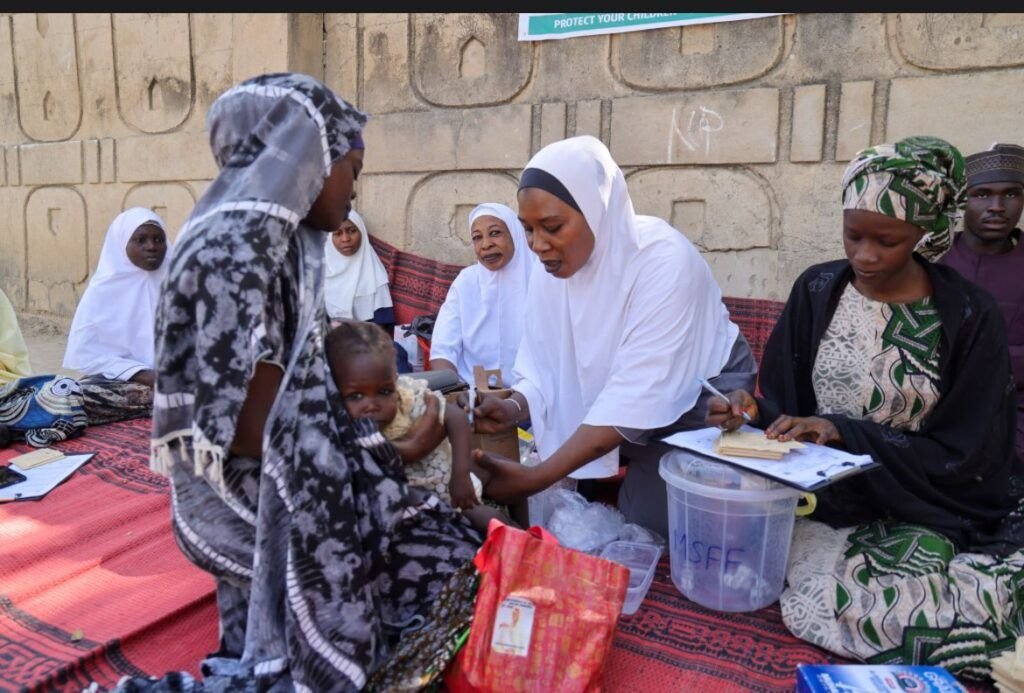


Health workers from Médecins Sans Frontières and the Borno State Ministry of Health have completed a vaccination campaign that reached 490,000 children in Maiduguri.
The effort went beyond the planned target of 387,000 and forms part of the response to ongoing diphtheria cases across northern Nigeria.
The campaign took place in two rounds during February 2026 and focused on children up to the age of 14 in the Maiduguri Metropolitan Council area.
Teams moved through communities to register families and administer the vaccine on the spot.
Many parents brought their children after hearing messages from local health volunteers about the importance of protection.
Diphtheria spreads easily in crowded settings and can cause severe breathing problems if not prevented.
Nigeria has recorded thousands of suspected cases in recent years, with children hit hardest in places where routine immunisation rates remain low.
In Borno, years of insecurity and movement of people have made it harder for families to complete the full course of childhood vaccines.
MSF has supported treatment centres in the region for some time.
Staff provide care for those who fall ill while they work alongside state officials to stop further spread.
The recent vaccination drive builds on that work by raising immunity levels before more children face risk.
One health worker explained that the turnout showed how much families value these opportunities.
“Parents came forward once they understood the vaccine could keep their children safe,” she said.
Officials note that three doses give strong protection, yet many children in affected areas have received none or only some.
The campaign in Maiduguri adds to similar efforts in other states, though gaps in supply and access continue in remote locations.
With the first round already finished, teams plan follow-up activities to maintain coverage.
Health authorities and MSF say consistent routine vaccination offers the best long-term defence against the disease.
This joint operation highlights how medical organisations and local government can work together to reach large numbers of children even in challenging conditions.
Families in Maiduguri now have one less worry as they go about daily life.
The story shows real progress, yet it also serves as a reminder that more needs to happen to close immunisation gaps across the north.
When children receive vaccines on time, entire communities stay healthier.