

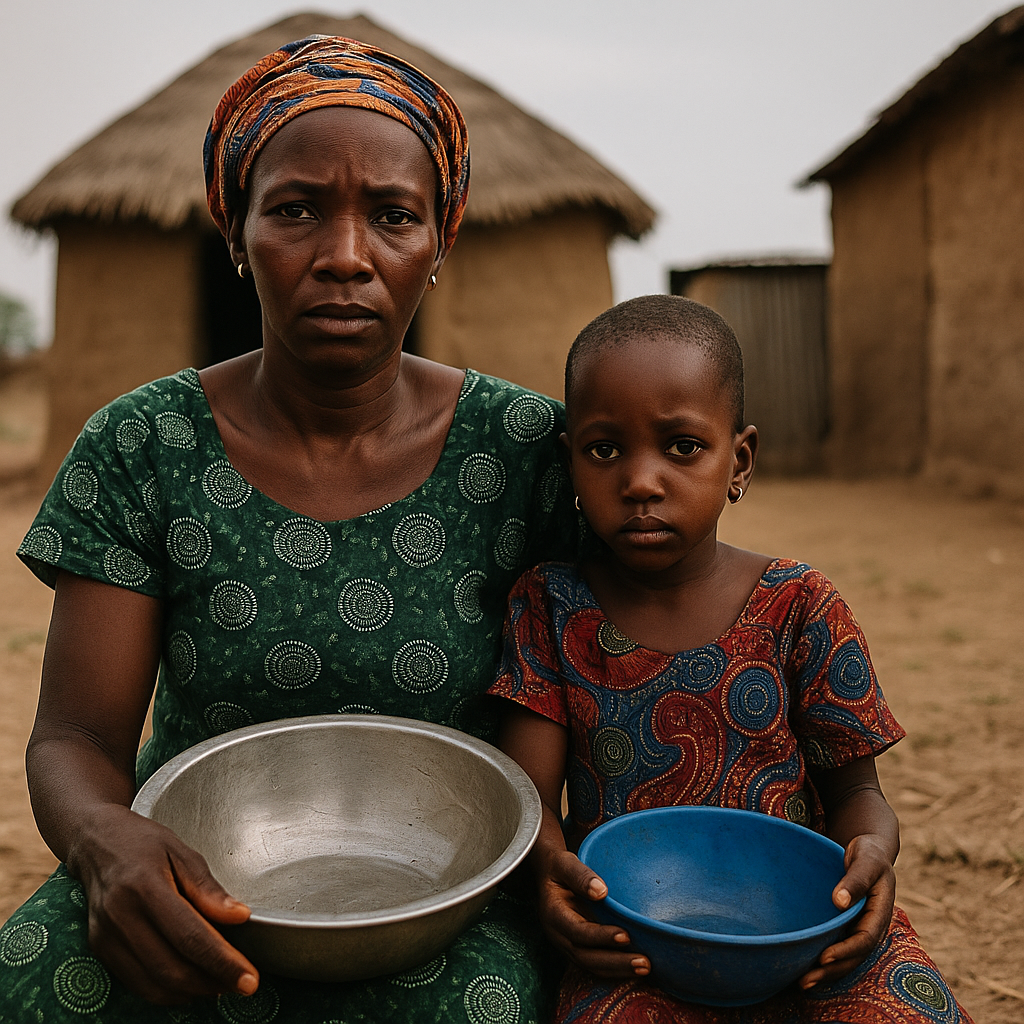
As global headlines focus on Trump’s threats toward Nigeria, the real crisis is unfolding quietly — hunger, displacement, and rising insecurity.
More than 31 million Nigerians face food insecurity today. What’s really fueling this crisis — and why is the world missing the point? Nigeria is facing one of its most serious hunger crises: recent assessments show around 31 million Nigerians experiencing acute food insecurity. The number rises toward 33 million, particularly as conflict, climate shocks and economic hardship combine. But the deeper question is what isn’t being talked about — the underlying failures, policy gaps and human costs behind the statistics.
According to the World Food Program (WFP) and the government-led food-security analysis (the Cadre Harmonisé), an estimated 30.6 to 33.1 million people across Nigeria are projected to face acute food and nutrition insecurity during the 2025 lean season. Analysts point to three key drivers: conflict in the northeast (disrupting farming and markets), record-high food inflation and transport costs, and climate-related shocks such as floods that wiped out millions of hectares of farmland.
For example, in states like Borno, Yobe and Adamawa, where displacement is high, the conflict has forced farmers off their land and disrupted access to food assistance. “Nearly 31 million people in Nigeria are now facing acute hunger,” stated WFP’s Country Director. The United Nations Office at Geneva+1 At the same time, the removal of fuel subsidies, devaluation of the naira and soaring food and transport inflation have made staples unaffordable for millions. The price of beans, for instance, rose by 282% from the previous year in some zones.
Yet what often goes unnoticed is the scale of malnutrition behind these numbers. About 3.5 million children face severe malnutrition and more than 10 million children under five are acutely malnourished in Nigeria. Meanwhile, humanitarian funding is collapsing just as need increases; without sustained aid, hundreds of thousands of children risk losing access to nutrition clinics and care.
What we’re missing:
- Structural issues: Nigeria’s agriculture systems are under threat from insecurity, climate, and neglect. The farmers-herders crisis, abandonment of farmland and weak infrastructure are rarely front-page stories.
- Hidden costs: The toll of hunger is not only measured in numbers but in stunted children, lost educational chances and communities unable to rebuild.
- Diminishing funding: The world is watching other crises, yet Nigeria’s humanitarian needs continue to rise. The funding gap is a story in itself.
- Voices unheard: The families living on one meal a day, the mothers skipping meals for their children, the farmers watching crops fail — these human voices often disappear behind the data.