

Thousands of Modakeke residents in Osun State scramble for medical help elsewhere as their sole health centre decays.
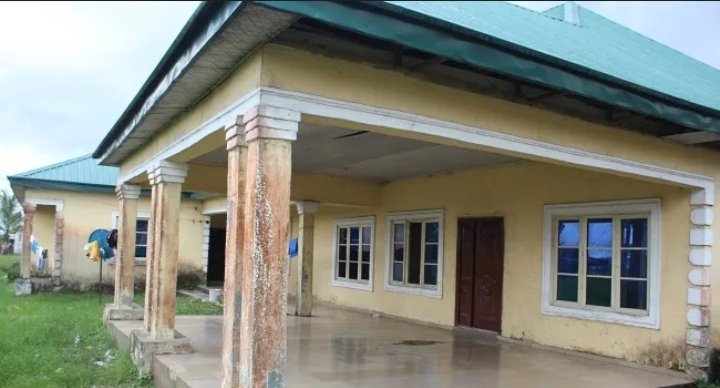
In the heart of Modakeke town, Ife Central Local Government Area, the Akarabata Primary Health Centre stands as a stark symbol of neglect.
Cracked walls snake across the building, while damaged roofing sheets let rain seep in during storms.
Broken doors and missing window panes leave the place exposed, and the floors show years of wear with deep potholes littering the grounds.
Health workers battle on without basics—no beds for patients, no electricity to power equipment, and no running water for hygiene.
At night, hoodlums take over the vulnerable site, adding fear to the mix for anyone daring to seek care after dark.
This dire state has dragged on for over seven years, locals say.
One resident, speaking in a video shared on social media, pleaded for help:
“The facility has been in ruin for over seven years— we need the state government to step in.”
Meanwhile, more than 6,000 people rely on this centre, but many now trek long distances to other facilities in the area for even simple treatments.
Pregnant women, children, and the elderly suffer most from this gap, turning minor ailments into major ordeals.
Civic groups have stepped up where officials lag.
Tracka, a monitoring platform, visited in February 2026 and flagged the issues loudly.
They documented the decay—dirty rooms shrouded in cobwebs, empty waiting areas without a single chair—and shared photos that sparked outrage online.
The facility manager told them that letters and reports flew to the Primary Health Care Board and state government, but silence followed.
Yet, Osun State pours billions of naira into healthcare each year, bolstered by federal programmes.
Governor Ademola Adeleke’s administration has touted improvements in primary care, but Akarabata tells a different tale.
Residents and activists point fingers at corruption and misplaced priorities, with one social media post lamenting:
“Nigerians really are paying the price for corruption.”
No official response has surfaced from the governor’s office or health ministry despite repeated calls.
In addition, community voices grow louder.
Posts on platforms like Facebook urge Adeleke to act, with one appeal stating:
“The abandoned structure is now vulnerable to vandalism—residents have to travel distant for medical attention.”
Tracka echoes this, imploring the National Primary Health Care Development Agency, Osun State Government, and Federal Ministry of Health to prioritise repairs.
As Modakeke waits, the crisis underscores broader woes in Nigeria’s healthcare system.
Without swift fixes, thousands risk their health in a facility that’s more hazard than haven.
Activists hope the spotlight will finally spur change, but for now, the community presses on amid the ruins.