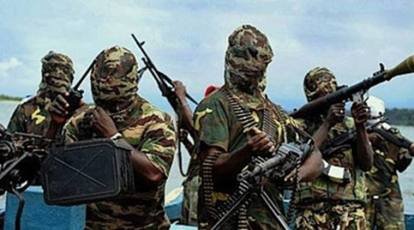

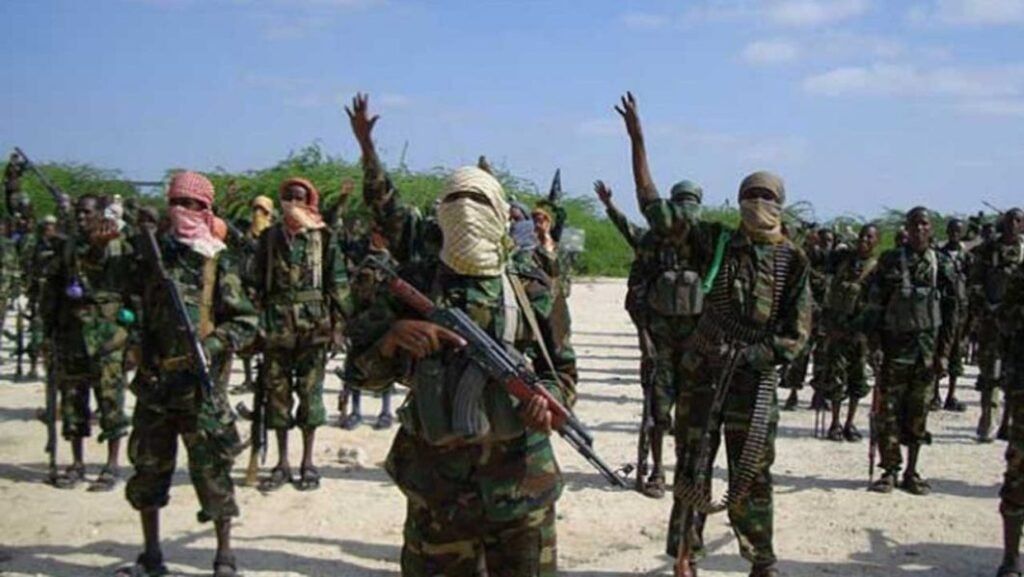

Terrorists burned four residents alive in Gwargwaba village, Zamfara State, after villagers defied demands for illegal payments.
Armed with sophisticated weapons, terrorists invaded Gwargwaba village in Nahuce District of Bungudu Local Government Area around 6 p.m. on January 30, 2026.
They trapped the victims inside their homes and set the structures ablaze, leading to their gruesome deaths.
Moreover, the attackers destroyed food supplies, slaughtered and incinerated livestock, and torched additional houses and storage facilities in a rampage of retribution.
Security analyst Bakatsine, who first reported the incident on X, detailed the chaos:
“On Thursday evening around 6pm, bandits armed with sophisticated weapons stormed Gwargwaba village in Nahuce District, Bungudu LGA of Zamfara State.
Four residents were burned alive in their homes, while houses, food stores and livestock were set ablaze.
The attack reportedly followed the villagers’ refusal to pay illegal levies imposed by the bandits.”
This firsthand account highlights the direct link between the villagers’ resistance and the violent backlash.
Furthermore, this assault underscores a broader pattern of extortion and terror in Nigeria’s northwest.
Terrorists frequently impose unauthorized levies on rural communities, escalating to destruction and murder when met with defiance.
For instance, similar attacks have recently plagued neighboring Niger State, where groups have razed properties and livestock over unpaid demands.
In Zamfara alone, ongoing insecurity has led to multiple deadly incidents, including ambushes and mass abductions, fueling calls for stronger intervention.
However, authorities have yet to issue an official statement or deploy immediate aid to the affected area.
As communities grapple with this escalating threat, residents question how long they must endure such violence before decisive action restores peace.