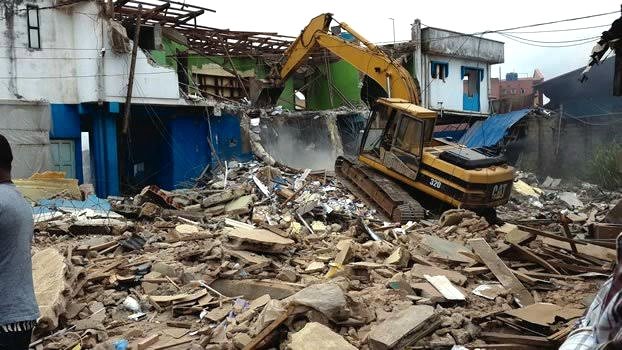

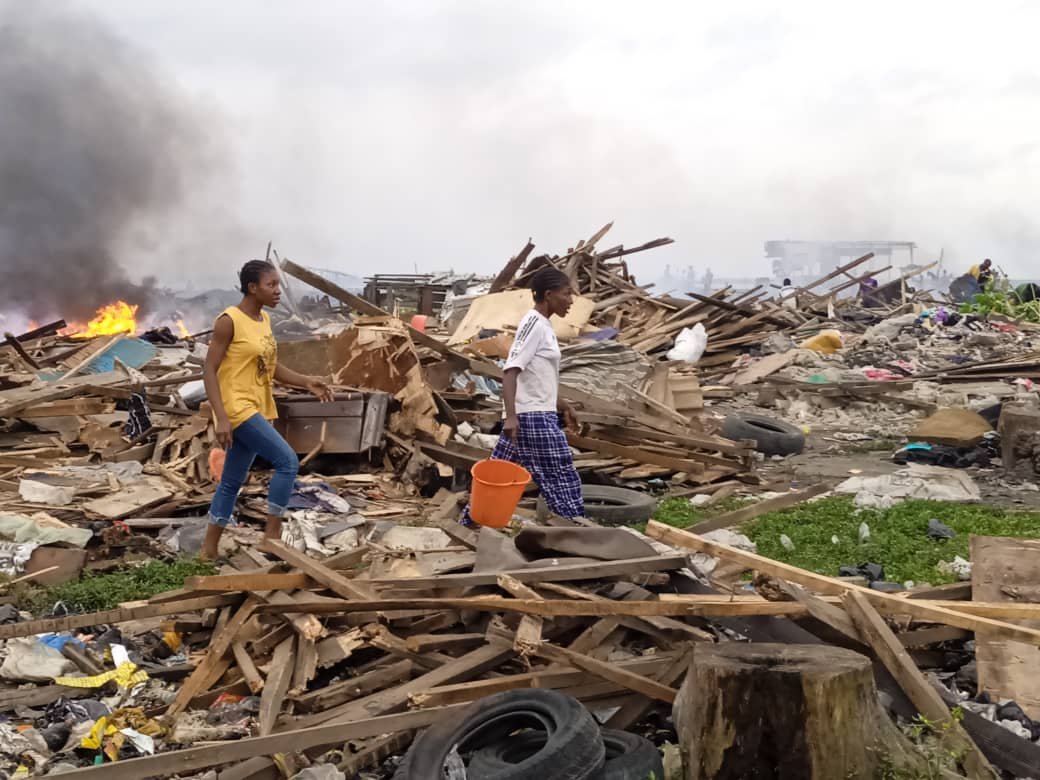

A teenage boy died from electrocution on January 8, 2026, after he came into contact with live electric cables dangling from illegally demolished buildings in Oworonshoki, Lagos.
The tragic incident unfolded in the aftermath of repeated demolition waves that began in late 2025.
Bulldozers and task force teams left behind hazardous rubble strewn with unsecured, live wires, turning once-bustling neighborhoods into deadly traps for residents, especially vulnerable youth.
Community members quickly identified the exposed cables as remnants of structures razed without proper disconnection of electricity.
Residents accuse the Lagos State Government and local monarch Oba Saliu Babatunde of driving the demolitions to clear waterfront land for redevelopment projects, including a planned N7 billion jetty, housing scheme, and fish market.
Despite court orders and public outcry halting forced evictions, operations continued sporadically, displacing thousands and leaving families homeless.
Earlier demolitions already claimed multiple lives.
Reports documented residents crushed under bulldozers, a woman who died from trauma, an elderly man who collapsed in detention, and children left crying in the streets after homes burned during night raids involving police and local vigilantes known as Madanwo.
The state claims the exercise promotes urban renewal and removes unsafe structures, while offering limited compensation—often as little as $150—to some verified owners.
Critics, including human rights groups and the Take It Back Movement, condemn the actions as brutal forced evictions that violate international standards and disregard due process.
No immediate official comment emerged from the Lagos State Government on the teenager’s death.
Community leaders demand urgent accountability, full disconnection of remaining live wires, and comprehensive support for displaced families.
This latest fatality underscores the human cost of rapid urbanization in Lagos, where development ambitions clash sharply with the right to safe housing and life for the city’s poorest residents.