

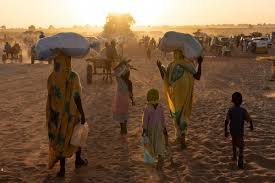

For Chad, the conflict in neighboring Sudan is far from a distant problem. The turmoil in Darfur, which borders eastern Chad, has shaped the country’s humanitarian and political landscape for more than twenty years. Every major surge of violence in Sudan’s west has pushed civilians across the border, and N’Djamena has repeatedly been forced to absorb and manage massive refugee flows.
According to the UN Refugee Agency (UNHCR), Chad now hosts more than 1.2 million Sudanese refugees, including at least 100,000 people who have fled since April. These new arrivals join communities that escaped earlier cycles of conflict dating back to the early 2000s. Many have settled in overcrowded camps and makeshift settlements along the border.
But Chad’s role in the crisis extends beyond humanitarian response. Over the years, its governments have been deeply entangled in Sudanese political and military dynamics. N’Djamena has supported various armed groups when doing so aligned with its security interests or political alliances. Likewise, Sudanese authorities in Khartoum have also intervened in Chadian affairs, backing insurgencies that toppled or threatened the government — from the 1990 rebellion that brought Idriss Déby to power, to armed offensives in 2006 and 2008 that nearly destabilized the capital.
The latest escalation has heightened fears of another destabilizing spillover. On October 26, the Rapid Support Forces (RSF) — the powerful paramilitary group commanded by General Mohammed Hamdan Dagalo, widely known as Hemedti — seized control of El-Fasher, the capital of North Darfur.
Following the city’s capture, disturbing videos emerged on social media showing killings and assaults allegedly perpetrated by RSF fighters. Despite the widespread circulation of these images, no official response has been issued by authorities in Khartoum.
Humanitarian agencies warn that the situation is deteriorating rapidly. As violence intensifies, more families are expected to flee toward Chad, where resources are already stretched thin. Aid groups are calling for urgent international support to prevent further destabilization in an already fragile region.