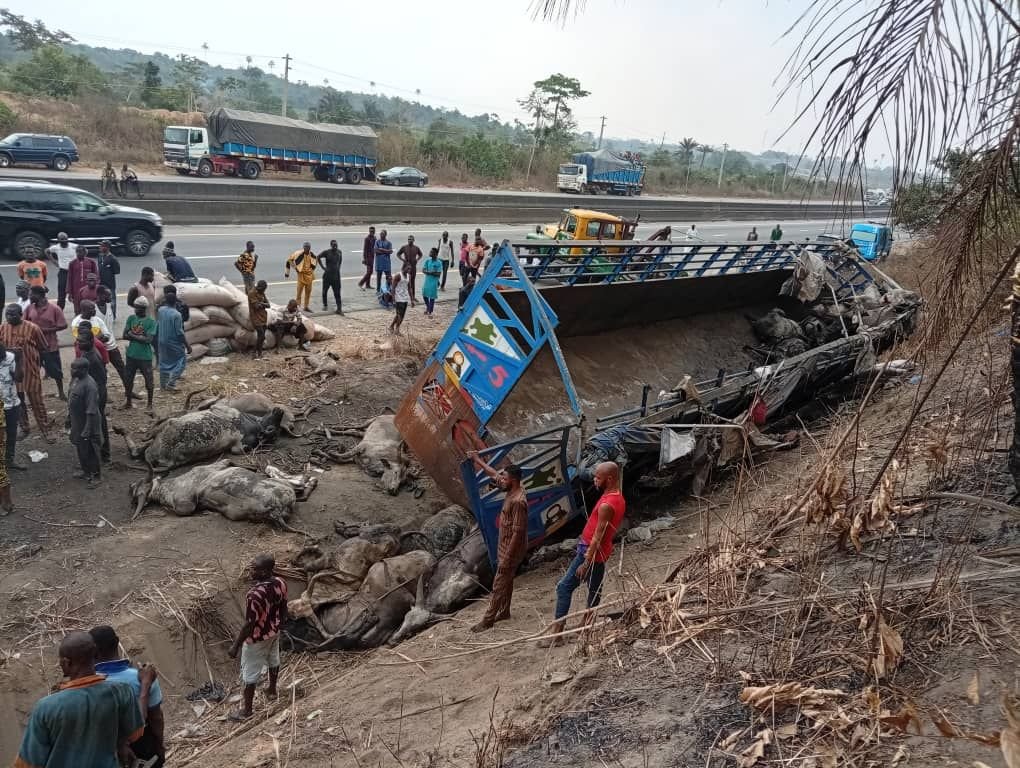


A heavily overloaded DAF CF 380 truck somersaulted on the Lagos-Ibadan Expressway around 11:27 a.m. on February 2, 2026, killing six passengers instantly or shortly after, injuring 23 others, and claiming the lives of 29 cattle.
The white-and-blue truck, bearing registration number SNA 287 XA, traveled from northern Nigeria toward Lagos while carrying approximately 35 cows alongside human passengers and bags of goods.
Federal Road Safety Corps (FRSC) officials in Ogun State attributed the lone crash primarily to driver fatigue combined with excessive speed.
The dangerous practice of mixed loading—transporting live animals and people together—further complicated rescue efforts and amplified the tragedy.
FRSC spokesperson Odunsi Afolabi confirmed the details in a statement released the same day.
Rescue teams from the Ogunmakin Unit arrived at the scene within two minutes and worked swiftly to evacuate survivors to nearby hospitals.
Eyewitnesses described chaotic scenes: the truck flipped, scattering debris, livestock carcasses, and personal belongings across the highway.
Social media users quickly linked the incident to broader economic pressures.
High fuel costs force many transporters to overload vehicles in order to cut expenses and maximize profits, a pattern that repeatedly leads to catastrophic failures on Nigeria’s busiest corridors.
One observer noted that drivers often pass FRSC checkpoints yet still overload, raising questions about enforcement effectiveness.
This crash highlights persistent dangers on the Lagos-Ibadan route, one of Nigeria’s most accident-prone highways.
Authorities regularly warn against speeding, fatigue, and illegal mixed loading, yet such violations continue.
The FRSC reiterated its call for strict adherence to safety rules, including proper segregation of goods and passengers.
Friends and family members now mourn the victims while survivors recover from serious injuries.
The incident serves as a stark reminder of the urgent need for improved driver training, stricter vehicle inspections, and economic measures to reduce overloading incentives on Nigerian roads.