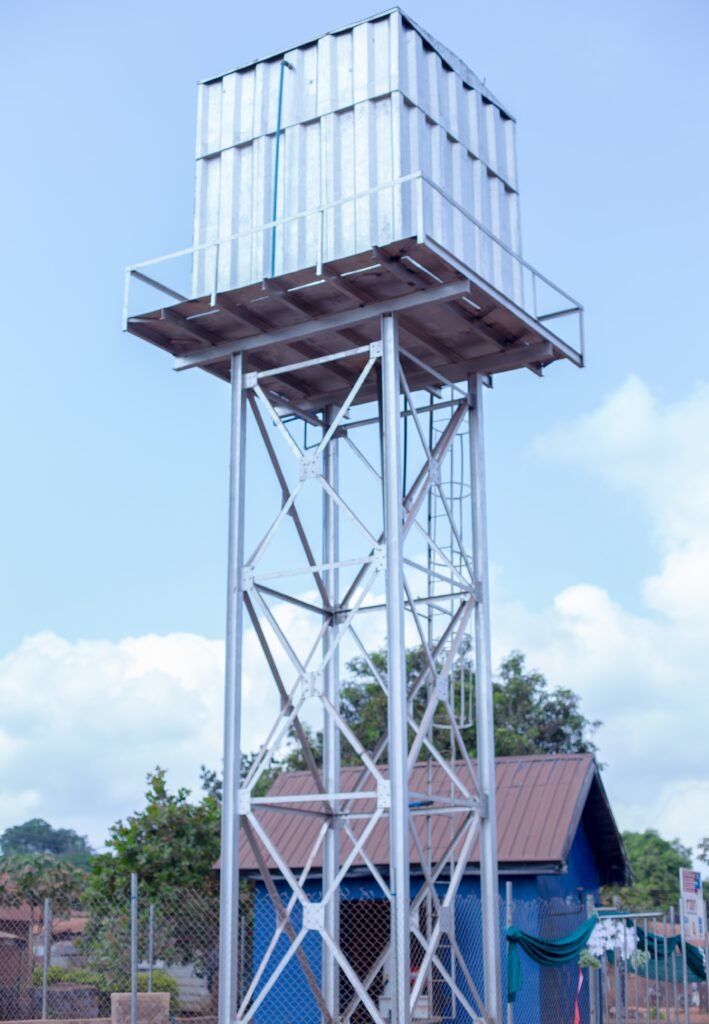


Failed water project leaves Obeta-Ndoki community in Rivers State parched and sick.
Men, women, and children in this rural community fetch drinking water from a single polluted stream shared with livestock.
They have no alternative. No borehole flows. No pipes deliver clean supply.
Civic monitors from Tracka exposed the crisis on January 11, 2026.
In June 2024, the Federal Government released ₦10.6 million through the Niger Delta Basin Development Authority for rehabilitation of the community’s water scheme, including full reticulation.
The contractor, Jonac Multi Purpose Company Limited, received the funds. Nineteen months later, residents see zero progress.
Tracka team members visited the site and documented the stark reality.
Photos show villagers carrying buckets from the murky stream.
Algae and debris float on the surface.
Animals wade in the same water people use for cooking and bathing.
Community members report frequent bouts of cholera, typhoid, and diarrhea.
Limited healthcare nearby turns minor illnesses into life-threatening conditions.
“The funds remain with the contractor, with no visible work on site,” Tracka stated in their January 11 post.
“This is yet another case of taxpayers’ money yet to deliver value to the people.”
Residents expressed deep frustration during the visit.
They described daily struggles that drain time and health.
Parents worry about children’s repeated sickness.
Families already face economic hardship under Nigeria’s rising cost of living and new tax measures.
They expected the 2024 federal project to bring relief.
Instead, neglect deepens their suffering.Tracka demands swift action.
The group urges the Economic and Financial Crimes Commission (EFCC) and Independent Corrupt Practices Commission (ICPC) to investigate immediately.
They call for authorities to compel the contractor back to site and complete the work without delay.
Similar failures plague other water initiatives across the region.
Recent collapses of HYPREP-funded tanks in Eleme and Khana LGAs highlight broader accountability gaps.
In Obeta-Ndoki, the pattern repeats: funds flow, promises vanish, communities endure.
Civic platforms like Tracka encourage citizens to monitor projects in their areas via public tools and report discrepancies.
Clean water counts as a basic right. For Obeta-Ndoki residents, that right remains out of reach—while ₦10.6 million sits unused.
Authorities must act now to turn disbursed funds into delivered relief.