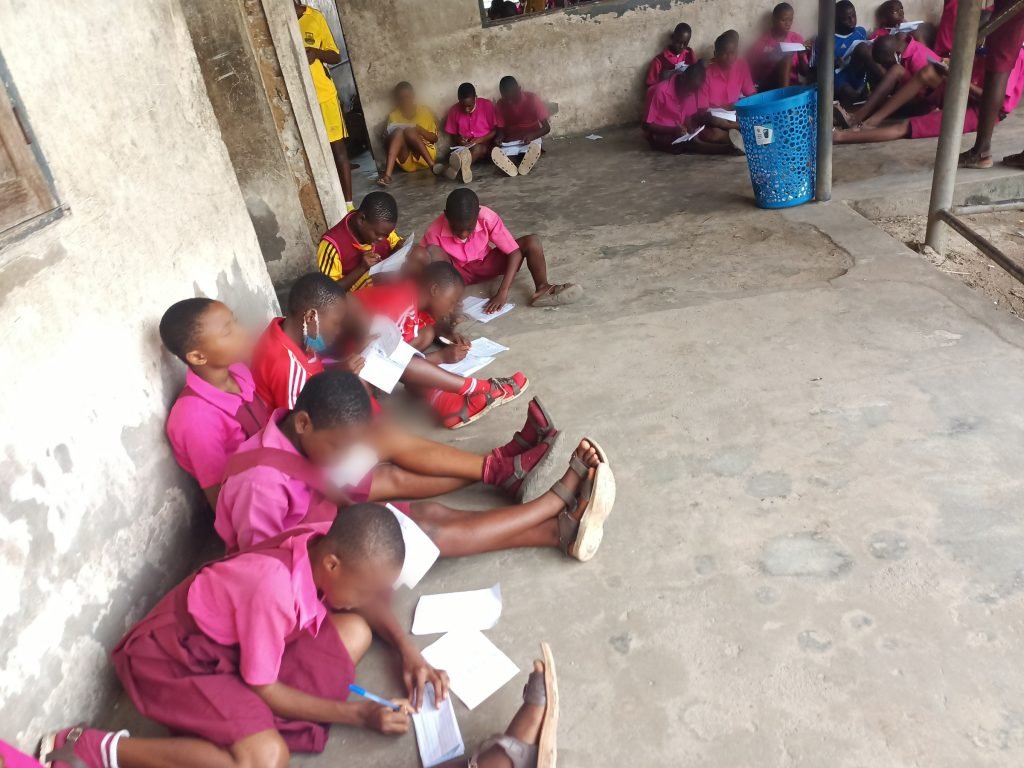


A crumbling secondary school in Uyo forces pupils to sit on the floor as a civic group urges Governor Umo Eno to order urgent repairs.
MonITNG, a civic technology platform, sounded the alarm on Saturday after human rights lawyer Inibehe Effiong shared shocking images from Community Comprehensive Secondary School in Four Towns.
The school sits right in the heart of the state capital, just metres from the secretariat, yet its classrooms now teeter on the edge of collapse.
Cracked walls snake across every room while roofs have blown off in places.
Doors and windows hang damaged or stand completely missing.
When rain falls, water pours inside and turns the broken, dusty floors into slippery hazards.
With no desks or chairs available, pupils perch on the bare ground or lean against walls to write notes.
Moreover, the group pulled no punches in its public statement.
“SHOCKING!!! Dear Gov @_PastorUmoEno, this is the terrible state of Community Comprehensive Secondary School, Four Towns, Uyo, Akwa Ibom State,” it declared.
“Children deserve classrooms where they can sit, learn, and thrive — not stand in cracked, leaking rooms.”
In addition, MonITNG highlighted the painful contrast with state finances.
Akwa Ibom has received more than N2.53 trillion in revenue over just 32 months, plus the 13 per cent oil derivation benefit.
Yet the group insists leaders divert these vast sums to political patronage and luxury vehicles for politicians instead of fixing schools.
However, the situation grows even more glaring because the current Commissioner for Education, Professor Ubong Essien Umoh, actually attended this very school as a pupil.
Still, it lies in ruins. Furthermore, MonITNG called directly on the governor to instruct the Ministry of Education to renovate and fully equip the building without delay.
“Akwa Ibom must show it values its children, its future leaders, and its promise as an oil-rich state by prioritising education over politics,” the group added.
This single school, the advocates stress, reveals a wider pattern.
When public funds flow freely but classrooms crumble, it raises tough questions about where priorities truly lie in Akwa Ibom.
Pupils and parents now wait to see whether urgent action will follow the outcry.