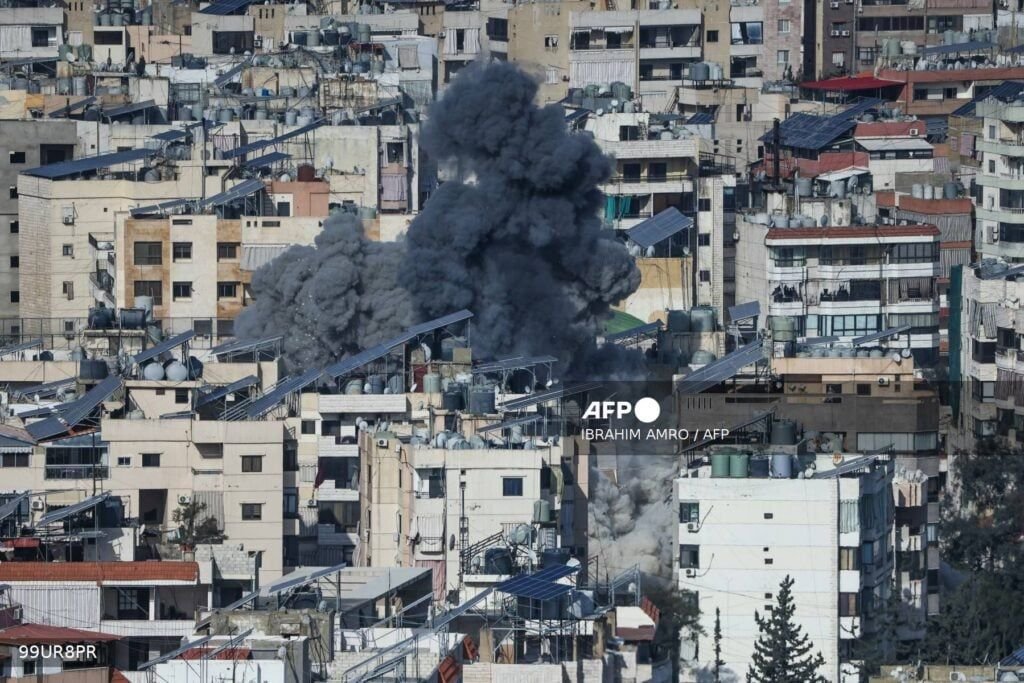


Israeli airstrikes and evacuation orders have forced over 100,000 people displaced with almost nothing, seeking safety in Beirut, Mount Lebanon, and other areas.
The UN Refugee Agency (UNHCR) confirmed the dramatic surge on 10 March 2026.
Karolina Lindholm Billing, UNHCR’s representative in Lebanon, described the pace as faster than during the 2024 Israel-Hezbollah war.
Families registered on the Lebanese government’s online platform in huge numbers, many cramming into overcrowded public schools, community centres, and other collective shelters that now struggle to cope.
Israeli forces launched heavy bombardment across southern Lebanon, the Bekaa Valley, and Beirut’s southern suburbs following Hezbollah’s rocket and drone attacks into Israel.
These strikes came in retaliation after US-Israeli actions against Iran, including the killing of Supreme Leader Ayatollah Ali Khamenei, which further inflamed tensions.
Evacuation warnings covered wide areas south of the Litani River and densely populated zones, forcing civilians to grab what they could and escape within minutes.
Smoke rises from bombed residential neighbourhoods as families seek safety in makeshift shelters or with relatives.
Thousands sleep in cars, on roadsides, or in streets when shelters reach capacity.
Humanitarian agencies report urgent shortages of water, food, blankets, and medical supplies.
Aid groups such as UNHCR, the World Food Programme, and Médecins Sans Frontières scramble to scale up distributions, yet funding remains critically low—many operations receive only a fraction of required resources.
Civilians bear the heaviest burden.
Hundreds have died or suffered injuries since the escalation began on 2 March, with residential buildings, infrastructure, and vital services destroyed.
Many displaced families face repeated upheaval after enduring the previous conflict in 2024, which left deep trauma and economic strain.
Lebanon’s government registers arrivals daily and opens new shelters, but officials warn that the numbers continue to climb rapidly.
International voices, including the UN Human Rights office, express grave concern over the broad scope of displacement orders, which risk violating international humanitarian law by causing prohibited forced displacement without adequate safe alternatives.
As the crisis deepens, aid organisations plead for immediate donor support to prevent widespread suffering.
Without swift de-escalation and increased funding, Lebanon faces a humanitarian catastrophe that could overwhelm its already fragile systems.