

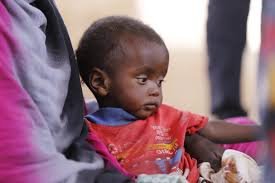

A new humanitarian report from OCHA Nigeria warns that communities across Borno, Adamawa and Yobe (the BAY states) are entering a worsening emergency as rising insurgent attacks, flooding and ongoing economic hardship push malnutrition rates to their highest levels in years.
Released on 3 December 2025, the update highlights growing concerns about the 2026 lean season, which is expected to bring even more severe food insecurity and nutrition challenges for millions of people in northeast Nigeria. OCHA says the next full assessment will be published in early January 2026.
According to the latest Integrated Food Security Phase Classification (IPC) analysis, malnutrition levels are deteriorating at an alarming pace. Out of the 62 local government areas assessed in the BAY states, 51 are projected to experience serious or critical levels of acute malnutrition in 2026. This is a major increase from 2024, when 31 LGAs fell into those categories.
The number of LGAs likely to reach critical acute malnutrition (IPC Phase 4) is also expected to double, rising from 10 in 2024 to 20 in the 2026 lean season. Humanitarian specialists say this marks one of the most concerning phases of the six-year trend of worsening malnutrition in the region.
Several factors are driving the crisis. Ongoing insurgency and repeated displacement continue to disrupt farming, limit access to land and restrict humanitarian operations. Aid agencies report increasing difficulty reaching communities where the need is most severe.
Poor sanitation, limited knowledge of infant feeding practices, poverty, high fertility rates and long-standing gaps in maternal and child healthcare further fuel the crisis. UNFPA data shows that the northeast still records one of the highest maternal mortality rates in Nigeria, underscoring the broader health risks facing families.
Recent seasonal floods have deepened the crisis by damaging crops and triggering outbreaks of cholera, malaria and other waterborne diseases. For already malnourished children with weak immune systems, these illnesses can be fatal.
Security incidents have spiked in Borno State, further complicating humanitarian access. Agencies warn that growing instability could hinder ongoing relief efforts unless conditions improve.
During an anticipatory action workshop in Adamawa State, humanitarian organisations examined lessons from previous emergencies and discussed strategies to mitigate the expected rise in hunger. They cautioned that without stronger funding, expanded access and more coordinated early action, the BAY states may face one of their most difficult lean seasons in recent years.
The situation continues to evolve, and humanitarian partners plan to issue a more detailed update in January 2026.