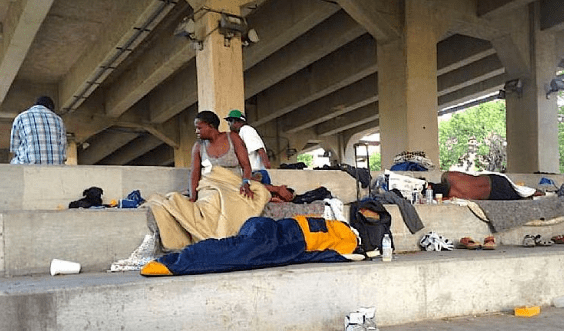


Millions of Nigerians endure life without stable shelter, a crisis that underscores deep-rooted challenges in Africa’s most populous nation.
According to the latest data from World Population Review, Nigeria holds the fourth spot globally in homelessness estimates, with 4.5 million affected individuals — trailing Pakistan, Syria, and Bangladesh.
This figure, based on 2022 assessments, highlights a rate of 206 homeless people per 10,000 residents, driven largely by ongoing insurgencies like Boko Haram in the northeast and rapid urbanization that outpaces housing development.
However, experts and alternative reports paint an even grimmer picture, with some estimates ballooning to over 24 million when including those in informal settlements or substandard housing.
For instance, the African Journal of Sustainable Development cites Nigeria as leading the world with 24.4 million homeless, attributing the surge to poverty, population growth exceeding 233 million, and a housing deficit of 17 million units.
Similarly, Business Insider Africa and other outlets echo this higher tally for 2025 projections, noting that neighborhoods in Lagos like Oshodi and Ajegunle teem with people sleeping under bridges or in overcrowded slums due to skyrocketing rents and job scarcity.
In addition, internal displacement exacerbates the issue.
Recent reports from humanitarian groups reveal that violence in regions like Borno State has forced families from their homes for over a decade.
Just last month, refugees began returning to towns like Malam Fatori despite lingering threats from armed groups, clinging to hope amid ruins.
Al Jazeera documented these returns, where survivors expressed resilience: “We must live, we must hope.”
The United Nations High Commissioner for Refugees (UNHCR) estimates around 3.5 million internally displaced persons (IDPs) in Nigeria as of late 2025, primarily from conflict zones in the north, though exact figures fluctuate with seasonal floods and communal clashes.
Meanwhile, critics point fingers at government policies under President Bola Tinubu’s administration, which began in 2023.
Social media users on X, reacting to a viral post from @ParallelFacts, lambasted demolitions of informal structures and economic reforms that have inflated living costs.
One commenter argued that “high rents and property grabs push more families onto the streets,” while others linked the crisis to multidimensional poverty affecting 63% of Nigerians.
Yet, these problems predate the current regime; Boko Haram’s insurgency alone displaced over 3 million since 2014, per global displacement trackers.
Furthermore, international comparisons reveal Nigeria’s struggle mirrors broader African trends.
The continent houses about 38.7% of the world’s estimated 140 million homeless, with causes ranging from conflict in Sudan and Uganda to inequality in Egypt.
In Nigeria, organizations like the Homeless World Cup foundation work with vulnerable youth in Lagos, where 70% of residents live in informal settlements and many survive on less than $1 a day.
As a result, calls for action intensify. Real estate experts urge annual production of 700,000 housing units to close the gap, but current output lags at 50,000.