
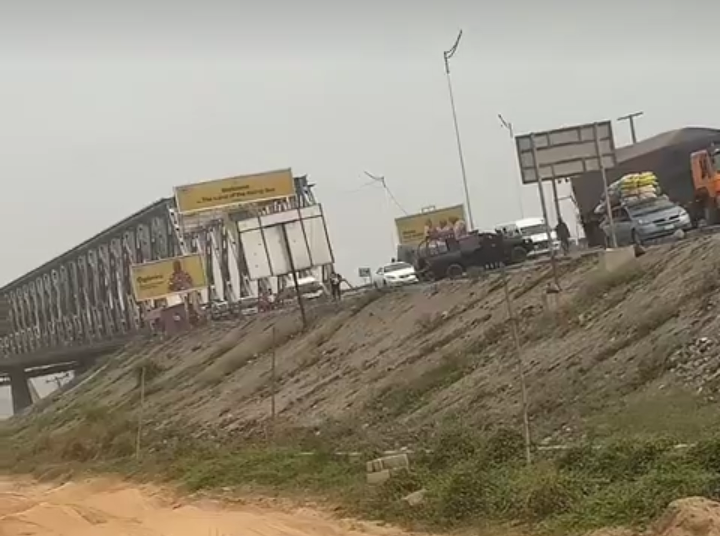

A viral video exposes terrifying sagging on the aging First Niger Bridge, as netizens urgently warn that police checkpoints trigger endless traffic jams and overload the structure with stationary heavy vehicles.
A concerned citizen in the footage points directly to the problem.
He explains that officers mount a checkpoint precisely at the bridge’s exit on the Anambra side.
Vehicles—especially trucks and buses—grind to a halt for checks, often for extended periods.
This constant stopping piles excessive static weight onto beams designed for moving traffic decades ago.
“The Nigerian Police are a major cause of this crisis,” the man declares in the clip shared widely on X.
“They cause serious congestion and put dangerous pressure on the bridge.”
The First Niger Bridge, constructed in 1965, connects Onitsha in Anambra State to Asaba in Delta State.
It serves as a vital artery for trade, commuting, and goods movement across southern Nigeria.
Heavy daily use already strains the aging span.
However, prolonged parking from checkpoints accelerates wear on joints, supports, and the overall framework.
Engineers have long cautioned against stationary loads on such older structures.
Public outrage surges online. Bloggers and residents label the bridge a “ticking time bomb.”
They demand immediate relocation of the checkpoint and full diversion to the newer Second Niger Bridge.
One voice captures the fear: “This is no longer just traffic—it’s about lives.”
Thousands cross daily—traders carrying perishables, families heading home, workers rushing to jobs.
A sudden failure could claim dozens of lives instantly and sever essential supply lines for millions in the region.
Authorities recently take protective steps elsewhere.
In mid-January 2026, the Federal Government bans sand mining within a 10-kilometer radius of the River Niger to shield bridge foundations from erosion.
Officials also commission a solar-powered CCTV monitoring center on the Second Niger Bridge.
Minister Dave Umahi stresses that CCTV replaces physical checkpoints on federal highways.
Security teams now monitor remotely and respond rapidly, eliminating roadblocks that slow traffic and endanger infrastructure.
Despite these advances, the old bridge still bears the brunt.
Critics argue that persistent checkpoints contradict federal directives to reduce them.
They call for swift enforcement: move police posts away from the bridge, enforce no-parking rules, and accelerate repairs or restrictions.
No official structural assessment confirms imminent collapse yet, but visible deterioration in viral clips alarms experts and everyday Nigerians alike.
Residents refuse to wait for tragedy. They press Governor Soludo, federal agencies, and security commands to act decisively now—before avoidable weight turns warning signs into catastrophe.
The bridge stands as more than steel and concrete.
It carries the daily hopes and survival of countless families.
Every delayed crossing reminds them: lives hang in the balance until authorities prioritize safety over outdated practices.