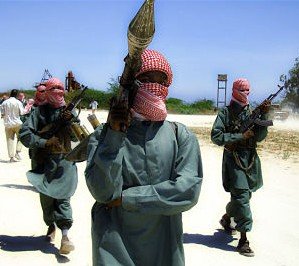

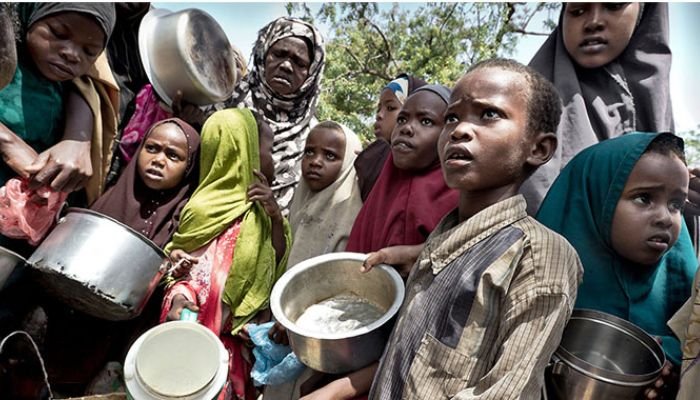

Terrorists killed over 200 in Woro, Kwara; nine days later, survivors beg for meals amid slow official response from the Nigerian Government.
They abducted an undetermined number of women and children, dragged them toward Kainji National Park, looted valuables, and set homes and shops ablaze after locals rejected their preaching.
Hundreds of survivors—mostly farmers and petty traders—fled to neighboring villages and towns in search of safety.
Many men stayed behind under the protection of rapidly deployed armed security forces from state and federal authorities, which prevented immediate follow-up attacks.
However, the violence destroyed farmlands and businesses, stripping survivors of their primary livelihoods.
Nine days after the assault, on February 12, displaced residents still struggled without consistent access to food, clothing, or adequate shelter.
Rita Danladi, who escaped abduction but lost her children and daughter-in-law to the terrorists, described her daily desperation. “There is almost nothing to eat,” she said.
“If I see someone or a family eating, I walk up to them to have a bit of whatever they are eating.”
Abdulrasheed Najeem narrowly survived by fleeing into the bush as bullets flew.
Terrorists burned his shops and more than N4 million worth of stored foodstuffs. He now wears only a borrowed gown.
“It was given to me by a friend,” he explained.Retired teacher Lasisi Tunde highlighted the reliance on informal help.
“The little food assistance comes from our relatives and concerned individuals from Kaiama and neighboring villages,” he stated. “The government hasn’t provided anything.”
The Nigerian Red Cross eventually distributed limited supplies—buckets, shovels, mosquito nets, maize grains, and water sachets—on February 12 and 13.
These items arrived through non-governmental channels and proved insufficient for the scale of need.
On February 11, the Kwara State Government established a seven-member committee to coordinate relief efforts.
Despite this step, no substantial aid reached survivors by mid-February.
At the federal level, the National Emergency Management Agency (NEMA) assessed the situation and announced on February 10 via social media that it had supplied relief materials to the state emergency agency for onward distribution.
Survivors, however, reported receiving none of it, exposing clear gaps in the delivery chain.
This humanitarian shortfall compounds the trauma in a region already vulnerable to terror threats from groups operating out of nearby forests.
As Ramadan approaches and communities mourn mass burials, displaced residents continue to plead for faster, more effective intervention from authorities to match earlier promises with tangible support before hunger and exposure claim more lives.