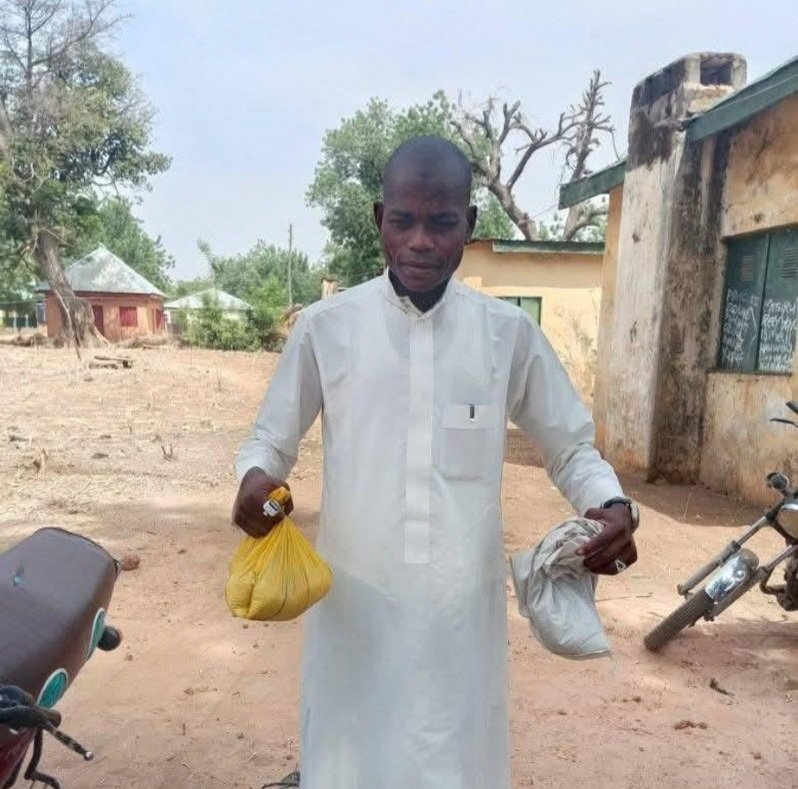


Kebbi State has suspended teacher Abduljalal Usman for three months without pay after he rejected a Ramadan palliative and criticised the government.
Usman, who teaches in a public school in Dandi Local Government Area, received one mudu of maize and one mudu of millet as part of the state’s distribution during Ramadan.
He turned down the items on Wednesday and spoke out against what he saw as poor governance and inadequate support for citizens.
The suspension letter from the Dandi Local Government Education Authority accused him of negligence of duty.
Officials did not detail the exact negligence in the document.
Many people in Kebbi and across Nigeria face hardship during Ramadan because of high food prices and limited income.
Teachers earn low salaries, often around ₦35,000 per month, which makes small aid packages feel insufficient for families.
After news of the suspension spread on social media, supporters rallied around Usman.
One person sent him ₦120,000—covering his three months’ salary plus a bonus—so he could manage during the break from work.
Public reaction grew quickly. Posts described the action as unfair treatment of a teacher who simply voiced frustration.
Some pointed out that Governor Nasir Idris once worked as a teacher himself.
The incident highlights ongoing debates about how governments distribute aid in northern Nigeria.
People often receive token amounts of grain or cash, yet many struggle with food insecurity year-round.
Usman now stays home without salary for the next three months.
His case continues to draw attention online as Nigerians discuss worker rights, free speech, and the real value of government relief efforts.