
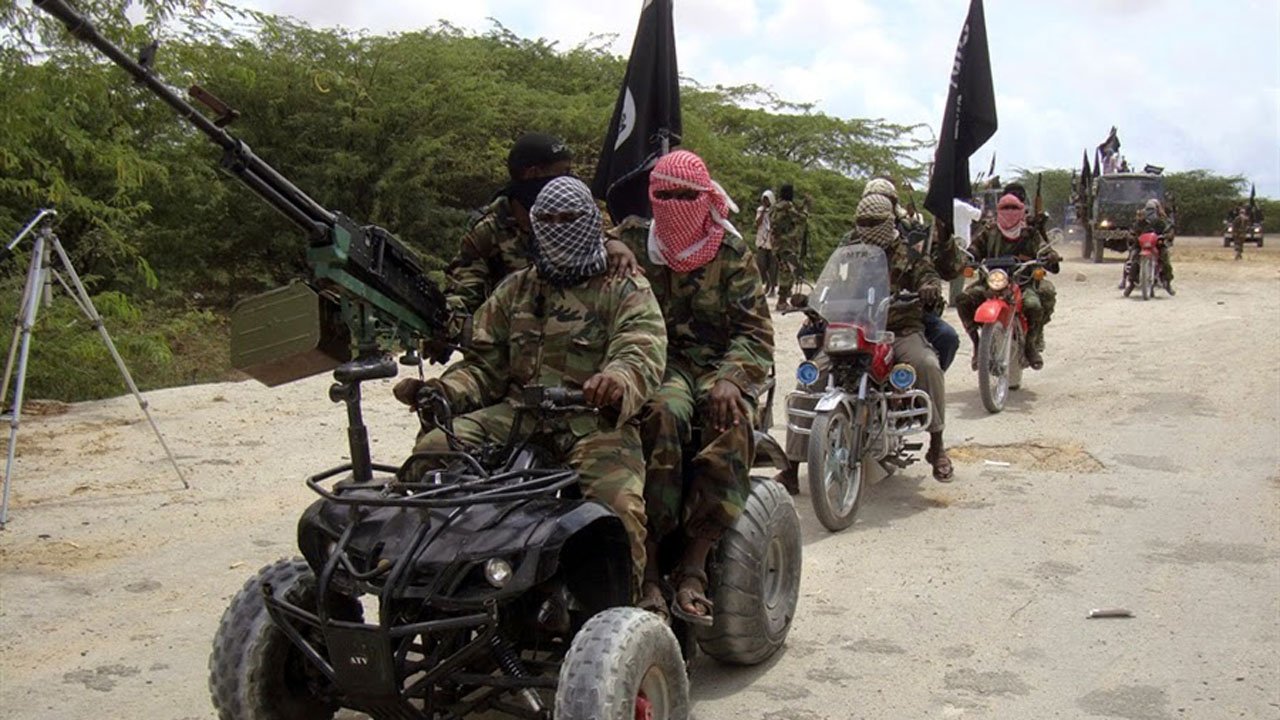

Suspected ISWAP terrorists launched a fierce late-night assault on a Nigerian military camp in Pulka, Gwoza Local Government Area of Borno State, on February 14, sparking heavy gunfire and setting parts of the facility ablaze.
The attack unfolded around midnight, as terrorists descended on the camp, unleashing a barrage of gunfire that echoed through the surrounding communities for approximately one and a half hours.
Local residents, startled awake by the intense shootout, reported hearing continuous exchanges between the terrorists and defending soldiers.
Meanwhile, satellite imagery from FIRMS detected significant heat signatures, confirming that the terrorists had torched sections of the military installation during the raid.
Although official casualty figures remain unconfirmed, sources close to the scene indicated several soldiers suffered injuries or fatalities in the confrontation.
The Nigerian military has not yet released a detailed statement on the incident, but similar clashes in recent weeks suggest the troops likely mounted a vigorous defense to repel the invaders.
For instance, just days earlier, security forces in Borno successfully thwarted an ISWAP advance, neutralizing threats and recovering abandoned weapons.
This assault fits into a broader pattern of intensified ISWAP operations in Nigeria’s northeast, where the group has increasingly targeted military outposts to undermine government control.
Originating as a 2016 splinter from Boko Haram and pledging allegiance to ISIS, ISWAP has evolved its tactics, incorporating drones for surveillance and strikes, as seen in January raids that claimed over two dozen soldiers’ lives in ambushes near Damasak and Kareto.
Moreover, the group’s use of improvised explosive devices and night assaults has complicated counterinsurgency efforts under Operation Hadin Kai, Nigeria’s ongoing campaign against jihadist threats in the Lake Chad Basin.
In addition, ISWAP’s activities have displaced thousands and exacerbated humanitarian crises in Borno, with earlier attacks like the September overrun of a base in Banki forcing civilians to flee across borders.
Security analysts warn that these escalations, including drone deployments first noted in attacks on bases in Wajikoro and Damboa, signal ISWAP’s growing sophistication and determination to expand influence.