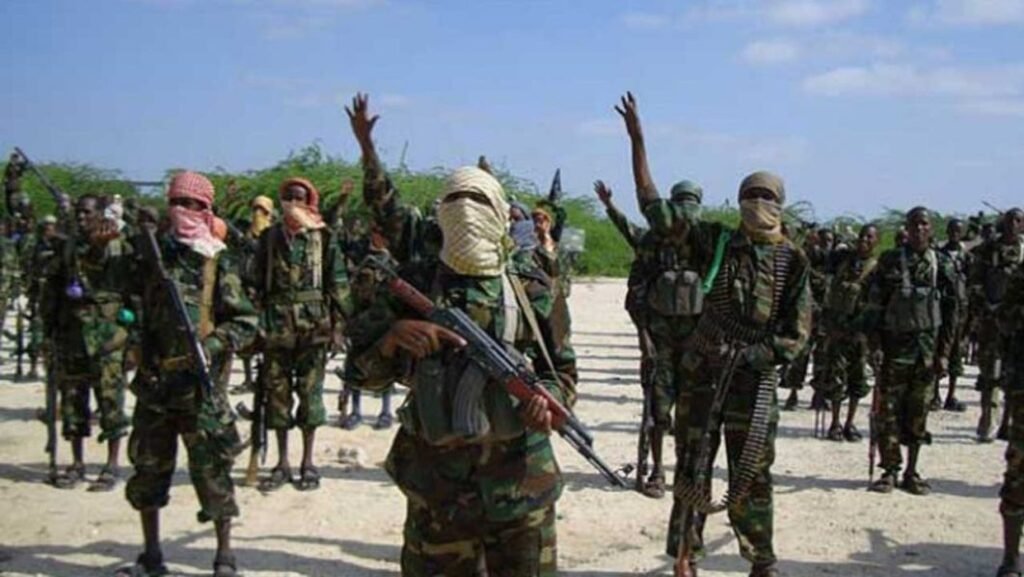

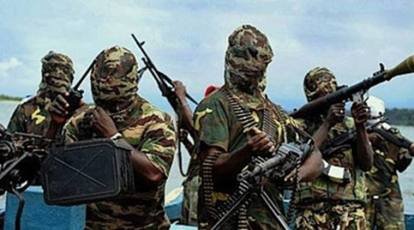

ISWAP terrorists killed several soldiers in a drone-backed attack on a military base in Borno State on January 29.
Terrorists from the Islamic State West Africa Province (ISWAP), a faction of Boko Haram, stormed the army facility in Sabon Gari, Damboa Local Government Area, around dawn.
They fired heavy gunfire, deployed explosives, and unleashed multiple armed drones to breach defenses.
The assailants burned armored tanks, military vehicles, and even an excavator, while seizing ammunition before reinforcements arrived.
Troops fought back fiercely and repelled the invasion, neutralizing at least 12 terrorists and recovering weapons like AK-47 rifles and grenade launchers.
However, the clash claimed lives among soldiers and members of the Civilian Joint Task Force (CJTF), with reports varying from six to dozens of casualties overall.
Military sources confirmed the incident to reporters, emphasizing that forces regained full control after the brief overrun.
ISWAP quickly claimed responsibility through a statement and released a video showing their fighters shooting toward the base, highlighting their escalating use of drone technology in the region.
Furthermore, this tactic marks a growing trend, as ISWAP has incorporated drones into ambushes since at least 2023, complicating Nigeria’s counterinsurgency efforts.
The attack underscores the persistent threat in Nigeria’s northeast, where the Boko Haram insurgency has raged since 2009, displacing over 2.5 million people and causing more than 35,000 deaths, according to United Nations estimates.
Meanwhile, recent operations show mixed results: Just a day earlier, on January 28, troops conducted a surprise raid nearby, eliminating another 12 terrorists and capturing arms.
Public outrage erupted online following the news.
Citizens demanded transparency from the military, with one commenter questioning why evidence surfaces only for losses but not victories.
Another linked the violence to broader national divisions, arguing that soldiers die needlessly in a fractured country.
Additionally, critics pointed to ongoing kidnappings elsewhere, like the 177 Christians held in Kaduna, to argue that terrorists gain ground while authorities focus on public relations.
As investigations continue, the Nigerian Army vows to intensify operations against ISWAP, but this latest strike reveals the terrorists’ adapting strategies and the heavy toll on security forces.