
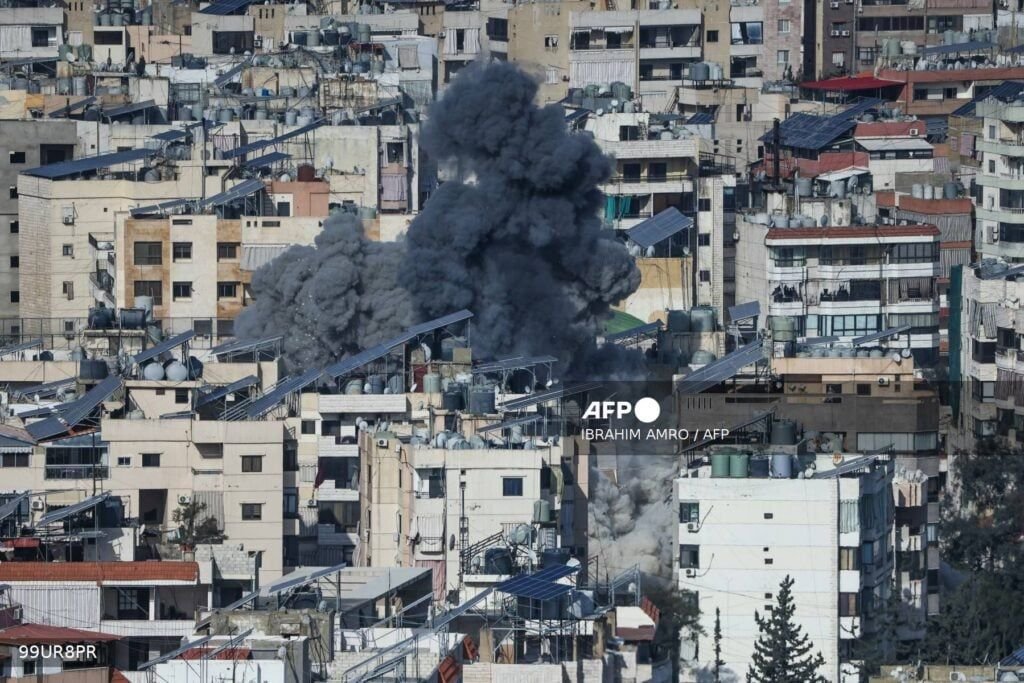

Israeli warplanes destroyed five of the six main bridges over Lebanon’s Litani River on Monday, cutting terrorists off from the rest of the country as fierce border fighting escalates.
The strikes come after Hezbollah terrorists fired rockets at Israel on 2 March in retaliation for the killing of Iran’s supreme leader.
That attack dragged Lebanon into the wider Middle East conflict despite the government’s efforts to stay out.
Lebanese President Joseph Aoun immediately condemned the bridges bombings as “a flagrant violation of Lebanon’s sovereignty” and an attempt to slice the south away from the rest of the nation.
Yet Israeli Defence Minister Israel Katz defended the action outright.
He said the army received orders “to immediately destroy all the bridges over the Litani River that are used for terrorist activity, in order to prevent Hezbollah terrorists and weapons from moving south”.
Moreover, the move echoes tactics from the 2006 war, when Israel hit nearly 100 bridges nationwide.
Many of the crossings now in ruins were rebuilt with international aid.
However, experts remain split on whether these latest strikes will truly shift the battlefield.
Military analyst Riad Kahwaji told AFP the operation carries real weight.
“In any military ground operation, first priority is to disrupt your enemy’s transportation and ability to move freely,” he explained.
The Litani splits large parts of southern Lebanon from the north, so the damage leaves fighters trapped unless they take long detours east through Hasbaya.
Yet retired Lebanese general Hicham Jaber pushed back on the idea of a game-changing blow.
He noted that terrorists south of the river already hold enough supplies to fight for months.
“The fighters have all their equipment with them,” Jaber said.
“They don’t need to cross back, except if they require specific logistical support.”
What is more, the Litani is shallow enough for men to ford on foot, though heavy weapons still need proper crossings.
Even so, Kahwaji insisted the impact runs deeper.
Shallow water might work for foot soldiers, but vehicles carrying rockets or supplies cannot cross without bridges.
As ground operations expand in the south, the severed links leave terrorists increasingly isolated.
For now, ordinary Lebanese watch with growing alarm.
Many fear Israel aims to empty the region south of the Litani for good, just as the bombs keep falling and the river divides a nation once more.