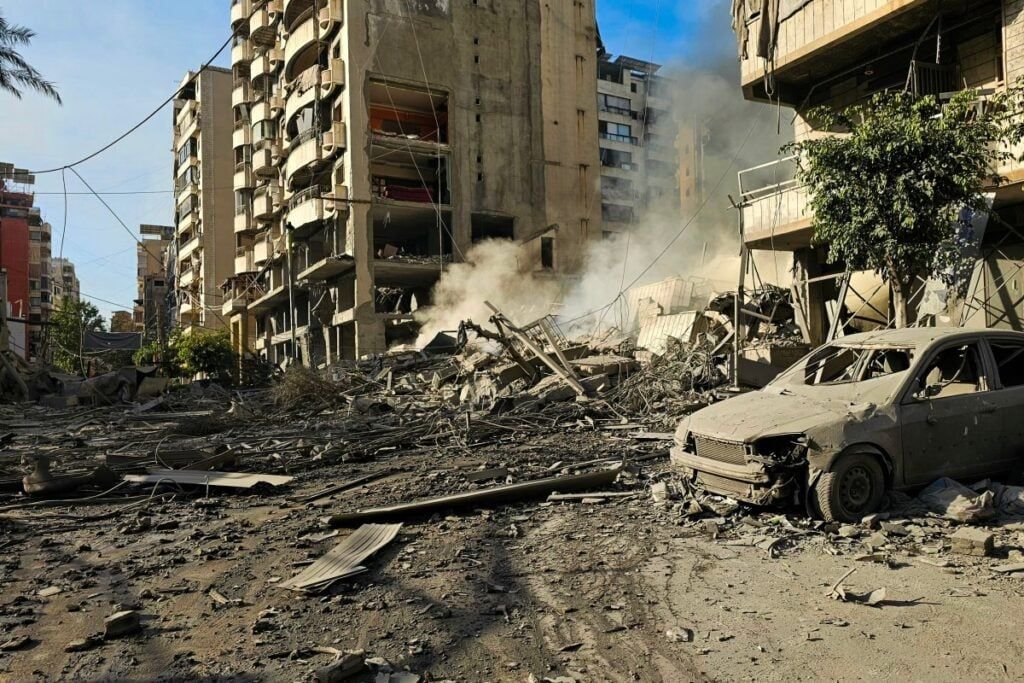


Explosions rocked central Israel on Monday morning after Iranian missiles penetrated defences, killing two construction workers and leaving others seriously hurt.
Emergency crews rushed to multiple impact sites following a fresh barrage launched from Iran.
Magen David Adom paramedics treated victims at the scenes, including two men in their 40s who died from shrapnel wounds at a construction site.
A third person at the same location remained in critical condition, while three more suffered moderate to light injuries nearby.
Air raid sirens blared across much of the country as the Israeli military detected incoming projectiles.
Residents hurried into shelters amid the sounds of interceptions and blasts.
Although Israel’s advanced defence systems intercepted many of the missiles, some got through, causing direct hits and scattering debris.
This latest exchange comes just hours after Iran named Mojtaba Khamenei as its new supreme leader, following the death of his father, Ayatollah Ali Khamenei, in earlier US-Israeli strikes.
Iranian state media described the missile volleys as retaliation in the ongoing war that erupted on 28 February, when joint American and Israeli forces targeted Iranian military and nuclear sites.
The conflict has already claimed lives on both sides.
In Israel, the death toll from Iranian attacks now stands at around 11, with dozens more injured across repeated barrages.
On the Iranian side, reports indicate over 1,200 deaths, including heavy civilian losses from strikes on infrastructure and, controversially, a school in Minab.
Meanwhile, Israel continued its offensive, launching extensive airstrikes on Iranian targets in Tehran, Isfahan, and other areas.
The military said these operations hit missile launchers, Revolutionary Guard facilities, and energy infrastructure to degrade Iran’s ability to strike back.
Tensions spilled beyond the two countries, with Iran firing drones and missiles at US bases and allies in the Gulf, disrupting oil facilities in Bahrain and prompting airspace closures.
Gulf nations condemned the attacks as reckless, while global oil prices climbed amid fears of wider disruption.
As sirens fell silent and rescue teams cleared rubble, Israelis emerged cautiously from shelters.
Many expressed frustration over the relentless cycle of strikes and counter-strikes.
In Tehran, smoke still rose from fresh damage, underscoring how quickly the war has escalated since late February.
Both sides show no immediate signs of backing down, leaving the region on edge for what could come next.