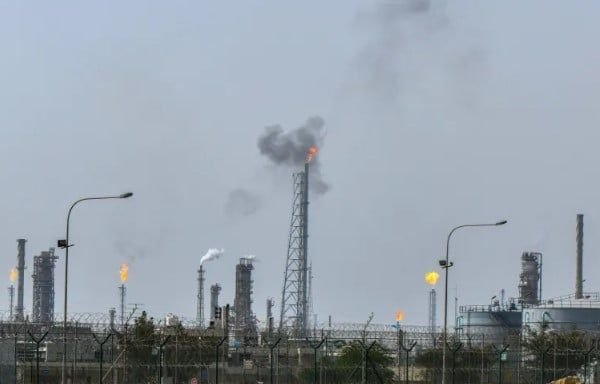


Iranian drones slammed into Kuwait’s Mina al-Ahmadi refinery early on Thursday, triggering a raging fire that sent thick black smoke billowing across the Gulf.
The strike came hours after Israeli jets pounded Iran’s giant South Pars gas field, and Tehran wasted no time hitting back.
Kuwait, a close US ally, now finds itself caught in the crossfire as the conflict spreads far beyond the Israel-Iran border.
Moments later, Iranian missiles slammed into Qatar’s Ras Laffan industrial zone and several targets inside Israel itself.
Israeli Prime Minister Benjamin Netanyahu brushed off the attacks, telling reporters the war “will end swiftly and decisively”.
Yet Iran’s Revolutionary Guards fired a very different message:
production of new missiles continues around the clock, even under bombardment.
Oil markets reacted instantly. Brent crude surged to $108 a barrel as traders feared fresh supply shocks from the world’s most vital energy region.
Analysts already warn the damage could cost the Gulf economies up to $20 billion a year in lost output and repairs.
“Volatility is turning into a full-blown crisis,” said energy economist Dr Sarah Khalid from Dubai.
“If these attacks keep disrupting pipelines and terminals, we could see the worst oil shock since the 1970s.”
The United States has placed its forces in the Gulf on high alert, while Saudi Arabia and the UAE quietly urged all sides to step back.
For ordinary people across the region, the fear is simple:
One more misstep and the flames now licking Kuwait’s refinery could spread into something far bigger.