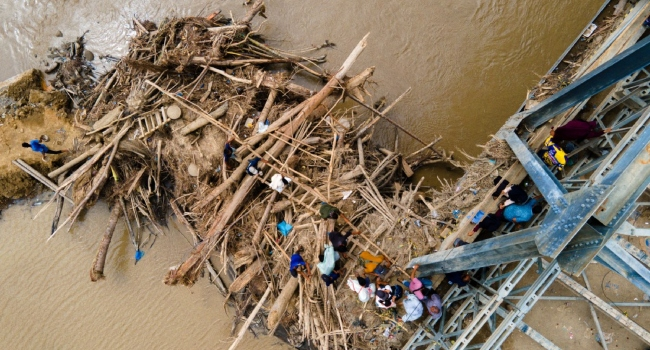


Rescuers confirmed Saturday that floods and landslides ravaging Indonesia’s Sumatra island have killed 1,003 people, with 218 still missing and over 5,400 injured.
JAKARTA — Torrential rains triggered by a rare tropical cyclone unleashed catastrophic floods and landslides across northern Sumatra starting late November, burying entire villages in mud, sweeping away homes, and displacing more than 1.2 million residents in one of the deadliest disasters to strike the region in decades.
Search and rescue teams pushed forward with operations in the hardest-hit provinces of Aceh, North Sumatra, and West Sumatra, navigating blocked roads, collapsed bridges, and thick debris to recover bodies and reach isolated communities.
However, challenging terrain and ongoing heavy rains hampered progress, forcing rescuers to deploy helicopters for aid drops and use heavy machinery to clear massive logs and rubble that turned into deadly projectiles during the deluge.
Meanwhile, President Prabowo Subianto toured evacuation centers and affected areas, assuring survivors that the government provided adequate food, shelter, and supplies while rejecting offers of international assistance.
Additionally, officials estimated reconstruction costs at over $3.1 billion, prompting reviews of logging permits and warnings about deforestation exacerbating the disaster’s severity due to lost natural barriers against flash floods.
Furthermore, experts linked the intensified rains to climate change, noting that illegal logging and palm oil plantations stripped vast forest cover, allowing soil erosion and rapid runoff during extreme weather events.
As families mourned lost loved ones and sifted through ruined belongings, aid workers distributed essential supplies, but many remote villages remained cut off, raising fears of food shortages and disease outbreaks in overcrowded shelters.