

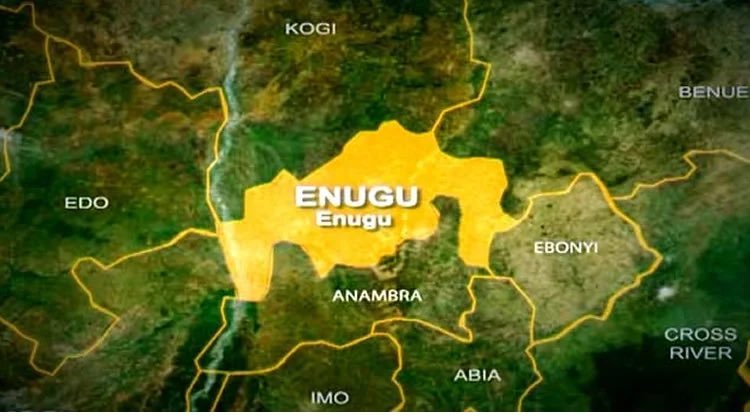

The Enugu State Government has unveiled plans to restrict tricycles, commonly known as keke, along with yellow buses and minibuses from operating on five major highways in the state capital, as part of the ongoing rollout of its Bus Rapid Transit (BRT) system.
The announcement, made on December 9, 2025, aims to enhance commuter safety, efficiency, and urban mobility while reorganizing the transport sector without displacing workers.
The restricted routes include Okpara Avenue–Abakaliki Road–New Haven Junction–Naira Triangle–Emene Airport; Ogui Road–Chime Avenue–Naira Triangle; New Haven Junction–Bisala Road–Rangers Avenue–WAEC–Nkpokiti–Zik’s Avenue; Ogui Road–Presidential Road–WAEC–Nkpokiti; and the entire Agbani Road stretch.
These corridors will be dedicated primarily to BRT buses, though taxis will still be permitted.
Tricycles and minibuses will be redirected to secondary roads and last-mile connectivity services.
State Commissioner for Transport Dr. Obi Ozor emphasized during a consultative meeting with transport unions on Monday that the changes are designed to modernize Enugu’s transport network in line with Governor Peter Mbah’s vision.
“We must be open to change. This reform is not about taking anyone’s job. It is about reorganising the system so that BRT buses operate on the primary roads, yellow buses serve the secondary routes, and tricycles provide last-mile connectivity. Everyone has a place in the value chain,” Ozor said.
The BRT system builds on earlier developments, including the August 2025 launch of 100 CNG-powered buses and five ultramodern bus terminals, which were commissioned to improve public transport.
The full fleet includes 200 CNG buses equipped with padded seats, air-conditioning, WiFi, and real-time tracking from a central command center, ensuring no standing passengers and enhanced safety. Additionally, 4,000 electric taxis are being assembled locally at ANAMMCO, with the first 1,000 expected within three months.
An electronic fare system, the Ije Card, will offer a 47% discount on BRT rides and be distributed to up to five million residents within 90 days.
Enugu’s transport sector serves an estimated two million daily commuters, and officials estimate a need for at least 8,000 buses to meet demand fully.
While the government highlights benefits like reduced fares and safer travel, the human impacts are evident in the lives of thousands of operators and riders who rely on these vehicles for income and mobility.
For tricycle drivers, the restrictions could mean shifting to less central routes, potentially affecting earnings.
Comrade Kingsley Edeh, representing the Amalgamated Tricycle Riders Association, which includes 18,000 members in the state, welcomed the assurance of no job losses but called for support in transitioning.
“We appreciate the government’s commitment that no one will be displaced but rather reorganised into a more efficient system,” Edeh said, while appealing for taxis to be made available as alternatives for riders who wish to switch.
Minibus operators face similar adjustments, with yellow buses confined to secondary paths. Union leaders have endorsed the plan but urged inclusion in operations.
Chidiebere Aniagu, Enugu State Chairman of the Road Transport Employers Association of Nigeria (RTEAN), stated that the union shares the vision for a safer ecosystem but appealed for addressing members’ concerns.
Augustine Agu, Chairman of the National Union of Road Transport Workers (NURTW), praised the governor’s progress: “Governor Mbah has done in two years what others could not do in eight years. His private-sector discipline is evident. We fully support him.”
Agu also requested financial facilities for unions to procure buses and participate in BRT and terminal management.Commuters stand to gain from the upgrades but may face short-term disruptions if bus availability lags.
Online reactions reflect this divide. One X user, @6kay170289, expressed optimism: “Way to go. Roll out the whole 200 brt buses asap. Enugu is rising.”
In contrast, @Uzuakoliii raised practical worries: “How many BRT buses has been made available for all the routes? This decision by the Enugu state goverment will bring so many stress to people in Enugu metropolis.”
Another user, @dan_p_ofem, noted approval: “The Enugu State Government is really stepping up with this BRT system.”
A joint review committee of ministry officials and union representatives has been formed to finalize details, including loading bay allocations at new terminals.
The exact launch date for the dedicated BRT routes remains pending, but consultations indicate a focus on minimizing hardships during the transition.