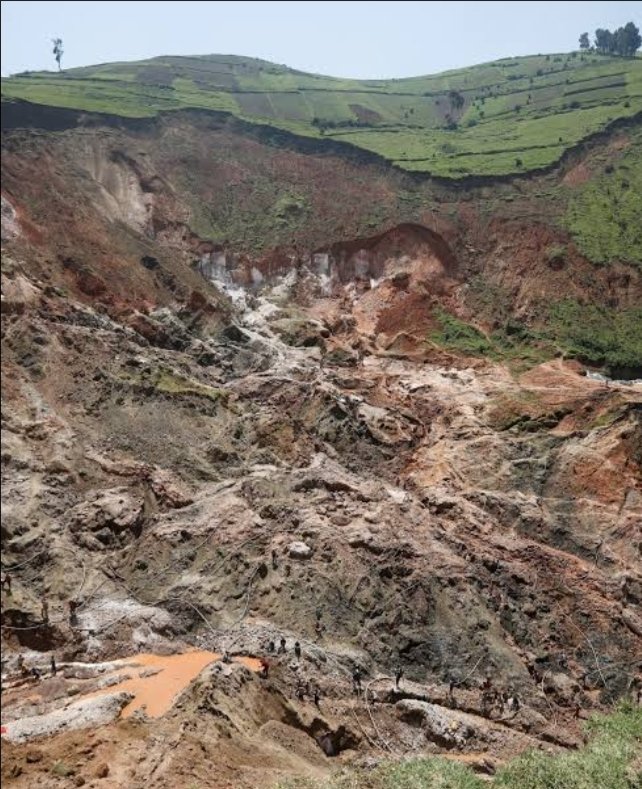

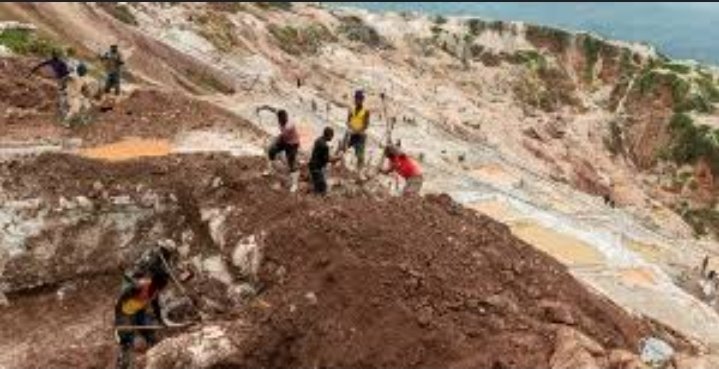

A massive landslide triggered by relentless heavy rains devastated the Rubaya coltan mining site in eastern Democratic Republic of Congo on Wednesday, claiming more than 200 lives.
A catastrophic landslide slammed into the Rubaya coltan mining hub in North Kivu province on Wednesday, burying scores of artisanal miners, children, and market women alive and leaving at least 200 dead, rebel authorities confirmed Saturday.
Lumumba Kambere Muyisa, spokesperson for the rebel-appointed governor of North Kivu, told Reuters and other outlets that the death toll exceeded 200, with some bodies still trapped under mud and debris.
“More than 200 people were victims of this landslide, including miners, children, and market women,” Muyisa said.
“Some people were rescued just in time and have serious injuries.”
An adviser to the governor, speaking anonymously, placed the confirmed fatalities at over 227, while rescue teams continue frantic efforts hampered by unstable ground and scarce heavy equipment.
The disaster struck in Rubaya, roughly 60 km northwest of Goma, a sprawling artisanal mining zone that produces around 15% of the world’s coltan—a critical tantalum-bearing mineral essential for smartphones, laptops, and other electronics.
M23 rebels, backed by Rwanda according to UN reports, seized control of the area in 2024 and have taxed mineral extraction there since.
Heavy downpours saturated the hillsides, destabilizing the poorly supported hand-dug tunnels and informal camps that dot the landscape.
Former miners describe the site as riddled with dangerous, unregulated pits where workers dig manually without proper reinforcement—one collapse can cascade across multiple shafts.
Women and children often work alongside men or live in nearby shelters on the slopes, which amplified the human cost when the earth gave way.
Rescuers pulled some survivors from the mud with limited tools, and local health facilities treat the injured while critical cases head to Goma.
Officials suspended mining operations immediately after the collapse.
This tragedy highlights the deadly risks that persist in eastern Congo’s mineral boom.
Artisanal sites like Rubaya supply global tech supply chains yet operate with minimal safety oversight amid ongoing conflict.
The United Nations and rights groups repeatedly warn that armed groups exploit these resources to fund fighting that has killed thousands and displaced hundreds of thousands in recent years.
As recovery teams dig on and families search for missing loved ones, the Rubaya collapse stands as one of the deadliest mining disasters in the region’s recent history, exposing once again the brutal human price behind the minerals powering modern life.