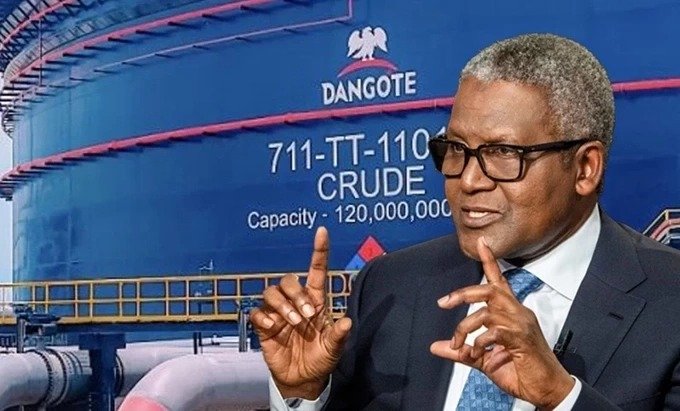


Dangote Refinery hiked petrol prices to N1,175 per litre on Monday, marking the third increase in just one week.
This latest jump, from N995 to N1,175, stems directly from soaring global crude oil costs driven by the escalating US-Iran conflict.
As refineries in the Middle East shut down and supply chains falter, Nigeria feels the ripple effects despite its own oil production.
Dangote officials insist they absorbed 20% of the cost spike to shield the domestic market, but they still passed on the burden to avoid deeper shortages.
However, this move amplifies an already brutal cost-of-living squeeze for millions of Nigerians.
Retail prices now exceed N1,000 per litre in many areas, with some stations in Lagos and Abuja charging up to N1,200.
Long queues snake around fuel pumps as drivers scramble for every drop, echoing the chaos that gripped the country before Dangote’s operations ramped up.
As a result, everyday people bear the brunt.
Transport fares have skyrocketed, forcing commuters like Lagos trader Aisha Bello to walk miles to her market stall.
“How are we supposed to survive?” she asked in a recent interview, her voice cracking with exhaustion.
“My family eats once a day now because bus rides cost double what they did last month.”
Stories like Aisha’s multiply across the nation, where families skip meals and children miss school due to unaffordable rides.
Furthermore, the hikes fuel broader poverty.
Nigeria’s inflation already hovers near record highs, and experts warn this could push millions deeper into hardship.
Food prices climb as trucks guzzle more expensive petrol to deliver goods, making staples like rice and yam out of reach for low-income households.
In rural areas, farmers struggle too – higher fuel costs eat into their slim profits, trapping them in a cycle of debt.
Meanwhile, public outcry grows louder. On social media, Nigerians vent their frustration.
One user, Ayobami, lamented, “Every day, the aim of Nigeria to her citizens is to make life so difficult. I just don’t know why.”
Another, Jonathan Jibo, questioned the logic:
“This petrol is refined here in Nigeria, so is the crude oil too. How does the war in Iran affect us?”
Calls for government action echo these sentiments, with suggestions like expanding CNG vehicle conversions and direct transport subsidies to ease the pain for the poorest.
Yet, amid the gloom, some see a silver lining.
Without Dangote’s refinery, analysts say, Nigeria might face total paralysis – endless queues, black markets, and stalled businesses.
“Imagine a Nigeria without a refinery; we would experience endless queues and an economy held hostage by fuel scarcity,” noted one commentator.
The facility prioritises local supply, insulating the country somewhat from global shocks.
Nevertheless, the human toll demands urgent relief.
Humanitarian groups urge targeted aid, such as food vouchers and cash transfers, to protect vulnerable groups like single mothers and informal workers.
As Peter Obi, former presidential candidate, recently highlighted in a broader critique of national priorities, Nigeria must elevate human life above economic maneuvers.
“We must choose Nigerian lives over politics,” he said, pointing to the bloodshed and suffering that compound economic woes.
In the end, while Dangote’s hikes respond to unavoidable global pressures, they underscore a stark reality:
Nigeria’s progress hinges on balancing market forces with compassion for its people.
Without swift interventions, this fuel crisis risks turning into a full-blown humanitarian emergency.