

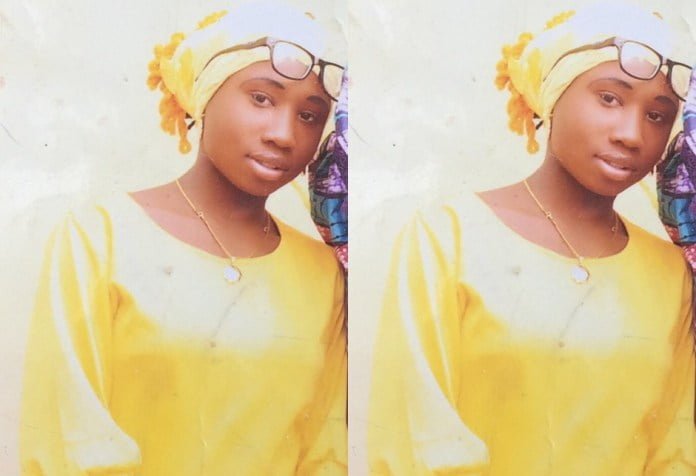

Boko Haram terrorists keep Leah Sharibu captive eight years after they abducted the then-14-year-old from Dapchi school in 2018 for refusing to renounce Christianity, as her parents decry APC government neglect.
Boko Haram terrorists stormed Government Girls Science and Technical College in Dapchi, Yobe State, on February 19, 2018, and abducted 110 schoolgirls.
They released 104 of them within weeks.
Yet the jihadists singled out Leah Sharibu and held her alone because she boldly refused to convert from Christianity to Islam.
Today, on the eighth anniversary of that raid, Leah—now 22—still suffers in Boko Haram captivity in northeast Nigeria.
Escapees who recently regained freedom confirm she remains alive but endures unimaginable hardship.
Reports detail forced marriage and multiple childbirths under harsh, degrading conditions.
Leah’s parents, Nathan and Rebecca Sharibu, mark the painful milestone with fresh anguish.
Through Dr. Gloria Samdi Puldu, president of the Leah Foundation and family spokesperson, they issue a strong statement.
“As Leah enters her ninth year in unimaginable hardship, she has endured forced marriage, multiple childbirths, and ongoing suffering,” the statement declares.
Rebecca Sharibu clings to hope amid years of emotional trauma, yet the family lives in constant uncertainty.
Furthermore, the parents directly lament the APC government’s neglect.
They describe the prolonged captivity as both a personal tragedy and a national conscience failure.
They urgently call on the current administration under President Bola Tinubu to intensify efforts, locate Leah, and secure her immediate release.
Meanwhile, the Leah Foundation verifies Leah’s survival through accounts from rescued girls.
The group also announces a virtual global prayer session themed “From Glory to Glory, Eight Years … One Faithful God.”
It appeals to world leaders, human rights organizations, and faith communities to amplify advocacy and pressure authorities until Leah returns home.
Additionally, international groups like Open Doors highlight Leah’s case on this anniversary.
They urge sustained global prayers and note how her steadfast faith inspires many despite the ordeal.
Escapee testimonies, including from other Christian girls who refused conversion, reinforce calls for action against Boko Haram’s targeting of vulnerable schoolgirls.
Yet eight full years have passed with no verifiable government proof of life or concrete rescue progress.
The Sharibu family and advocates insist time has run out for delays.
They demand decisive intervention now to end Leah’s captivity and bring her back to her loved ones.
As prayer networks mobilise worldwide, Leah Sharibu’s story stands as a stark reminder of courage in captivity and the urgent need for action against Boko Haram’s terror.