

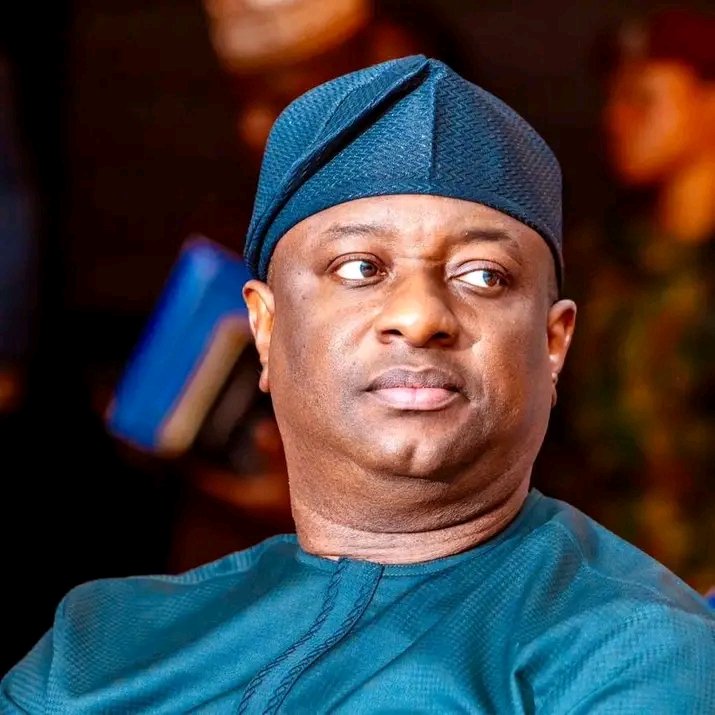

With one-way tickets now soaring to between ₦460,000 and ₦700,000 on key routes like Abuja to Lagos—up from as low as ₦50,000 just weeks ago—@DamiTheOG_’s post dissects Keyamo’s arguments, exposing what he calls a web of ongoing government fees that continue to inflate costs despite the minister’s claims of limited intervention powers.
A pointed tweet from Nigerian sociologist and marketer Damilola has increased public fury over the dramatic escalation in domestic airfares, directly challenging Aviation Minister Festus Keyamo’s insistence that deregulation renders the government helpless to act.
The backlash erupted in response to Keyamo’s press briefing earlier this week, where he emphasized that “the government has absolutely no powers to fix prices for private enterprises” in a deregulated market.
He pinned the spikes on external pressures like surging Jet A-1 fuel prices, a shortage of aircraft due to maintenance backlogs and foreign exchange shortages, and heightened seasonal demand ahead of the festive period.
Keyamo further noted that unilateral cuts to aviation taxes would require broader governmental coordination, as they fall under shared fiscal responsibilities, and revealed ongoing private engagements with airline executives to probe these root causes more deeply.
Yet, as Nigerians grapple with the fallout, many opting for perilous 12- to 20-hour road trips amid rising highway insecurity—@DamiTheOG_ fired back with a thread that methodically lists the contradictions, arguing that these very charges demonstrate the government’s active hand in the crisis.
“Mr @fkeyamo, with all due respect, stop insulting our intelligence,” the post begins.
“Deregulation of ticket pricing does NOT mean your government is powerless.
Your own ministry and agencies still collect a 5% ticket sales charge, collect a 5% cargo sales charge, slap NCAA, FAAN, NAMA & BASA charges that add ₦40,000–₦60,000 to EVERY single ticket, charge VAT + multiple import levies on Jet A1 (the same fuel you claim is ‘deregulated’), and charge airlines exorbitant landing, parking & navigation fees at airports YOU control.”
He contends these “interventions” are what propel fares to ₦300,000 and beyond, and could be “suspended today without fixing prices.”
To bolster his case, @DamiTheOG_
recalls the government’s swift 2023 release of billions in trapped funds for foreign airlines as undeniable proof of its capacity for targeted relief.
The phrase “We are suffering, not stupid” has begun trending modestly on X, symbolizing a broader demand for transparency as families weigh skipping Christmas reunions to avoid bankruptcy.
The Nigerian Senate unanimously condemned the hikes as “exploitative and insensitive,” summoning Keyamo, heads of the Nigerian Civil Aviation Authority (NCAA), Federal Airports Authority of Nigeria (FAAN), Nigerian Airspace Management Agency (NAMA), Bilateral Air Services Agreement (BASA) overseers, and major airlines like Air Peace and United Nigeria for emergency hearings this week.
Leading the charge, Senate Aviation Committee Chairman Abdulfatai Buhari decried how prices have rendered travel “inaccessible to the average citizen,” citing examples like ₦400,000–₦600,000 for short domestic hops and warning of potential nationwide disruptions.
Senators also pressed for updates on the stalled national carrier project, viewing it as a potential buffer against such volatility.
Airline representatives, meanwhile, defend the increases as market-driven necessities to offset costs, with the Aircraft Owners and Pilots Association of Nigeria (AOPAN) president, Dr. Alex Nwuba, framing them as seasonal adjustments to recoup low-demand losses.
But for critics like @DamiTheOG_, such justifications fall flat against the backdrop of unchecked fees that, they argue, the government could waive to provide immediate respite—much like past interventions.