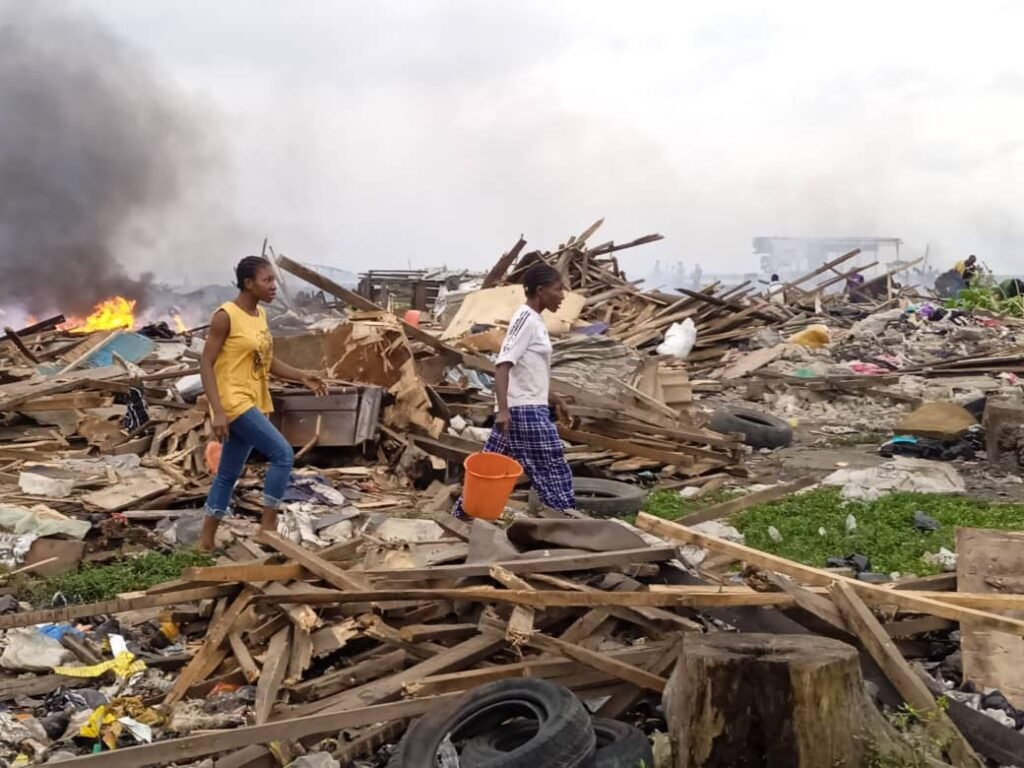



Activist Francis Nwapa sharply condemned the Lagos State government Tuesday after recent demolitions in Makoko forced residents including women and children to sleep exposed in open boats during a heavy rainstorm.
The destruction targeted the historic waterfront community, often called Africa’s largest floating slum or the “Venice of Nigeria.”
Authorities deployed excavators and armed police to tear down thousands of wooden stilt houses built over the Lagos Lagoon.
Officials insist the operation removes unsafe structures near high-voltage power lines, but critics denounce it as a land grab to clear prime waterfront land for development.
Francis Nwapa, a prominent revolutionary activist, blasted the authorities for inflicting inhumane suffering.
He highlighted how families, now homeless after their homes vanished, battled the cruel downpour with no shelter beyond their fragile canoes.
“The government subjects these people to outright cruelty,” Nwapa declared, pointing to the immediate humanitarian crisis unfolding on the water.
The demolitions, which intensified from late December 2025 into early 2026, have displaced over 10,000 people and destroyed more than 3,000 homes, according to rights groups and community leaders.
Earlier waves claimed lives, including two infants, amid clashes, tear gas, and arrests during protests.Residents navigate the wreckage daily.
Families huddle under makeshift coverings in boats, children miss school, and fishers lose their livelihoods as debris clutters the once-vibrant waterways.
Public outrage surges online and on the streets.
Commenters on social media demand immediate shelter provision and call for voters to reject the ruling party at the polls to halt such actions against vulnerable communities.
As the rain-soaked residents of Makoko cling to survival on the lagoon, the demolitions expose deep tensions between urban safety claims and the rights of long-established, low-income populations in Nigeria’s bustling commercial hub.