

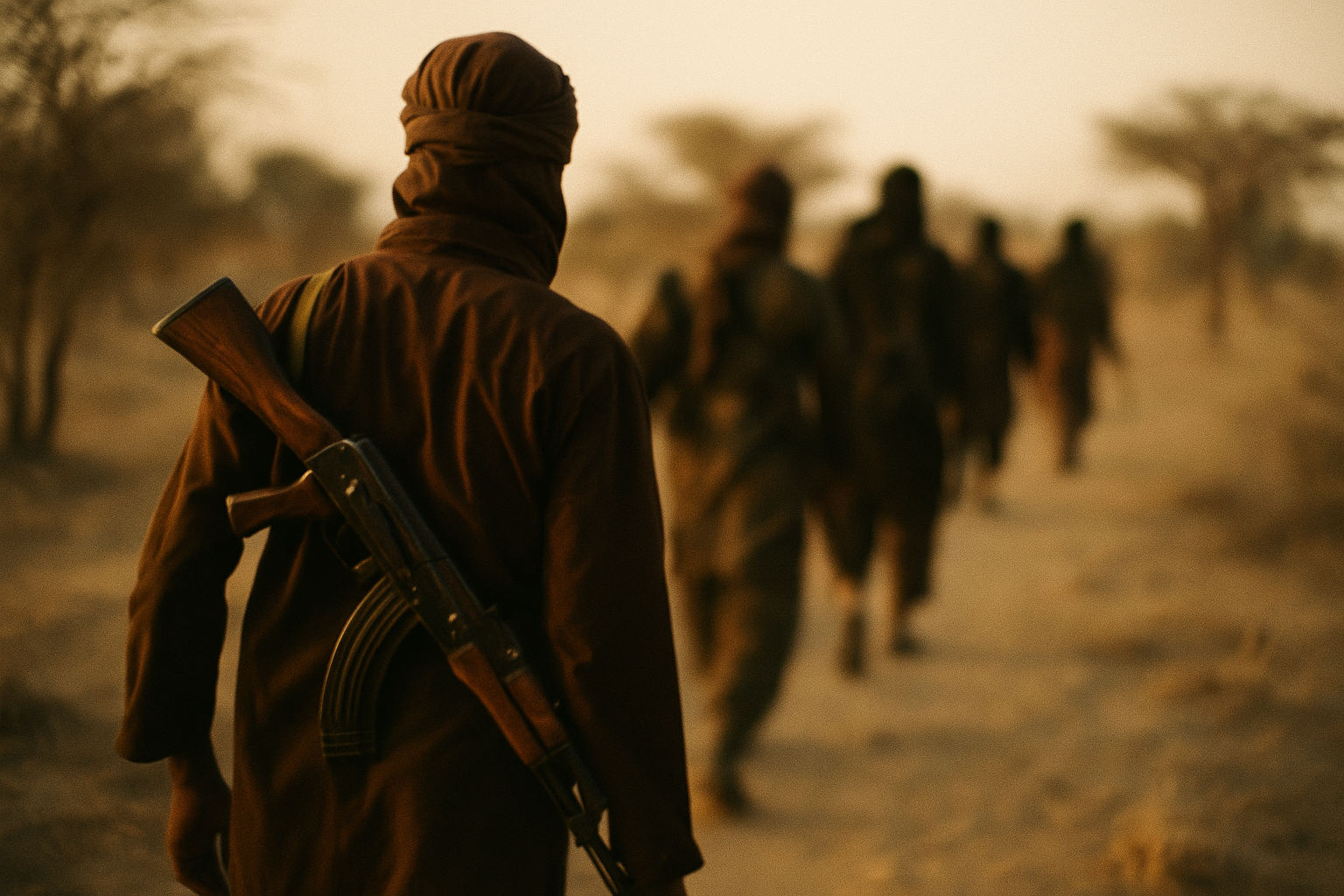

Major confrontation between rival jihadist groups in north-east Nigeria has reportedly left about 200 fighters dead, marking one of the bloodiest internal clashes in recent years.
According to local vigilante sources and intelligence officials, heavy fighting broke out over the weekend in Dogon Chiku, a remote settlement along the shores of Lake Chad, where both Boko Haram and Islamic State West Africa Province (ISWAP) operate. The area, located at the intersection of Nigeria, Niger, Chad and Cameroon, has long served as a strategic hub for militant activity due to its maze of river channels and informal trade routes.
The dispute is believed to have centered on control of territory and revenue sources. Armed factions in the Lake Chad basin often rely on forced taxation of fishermen, loggers and herders to fund their operations. As competition intensifies, violent confrontations between non-state groups have increased.
Sources told AFP that ISWAP suffered the heaviest losses. Several of its boats were allegedly captured or destroyed during the battle.
“From the casualty figures gathered, around 200 ISWAP fighters were killed,” said Babakura Kolo, a member of a local vigilante network assisting the Nigerian military.
A separate intelligence officer confirmed that the death toll was “well over 150,” describing the clash as a significant setback for ISWAP.
The two organisations have been locked in a struggle for dominance since ISWAP split from Boko Haram in 2016 after pledging allegiance to the Islamic State. Their rivalry has played out mostly around the Lake Chad basin, though splinter factions have spread into other parts of northern Nigeria.
Environmental changes have also influenced the dynamics of the conflict. Lake Chad has shrunk by more than 90% since the 1960s, according to the UN Environment Programme. As water recedes, new land routes open up — creating fresh battlegrounds for rival militant groups seeking control.
Although ISWAP has often been viewed by analysts as the more structured and resource-rich faction, Boko Haram has retained its grip on parts of the Lake Chad region. Sunday’s confrontation may be the most lethal encounter between the groups to date.
The history of their rivalry is marked by repeated offensives. In 2021, ISWAP fighters stormed the Sambisa Forest, Boko Haram’s former stronghold, during which notorious Boko Haram leader Abubakar Shekau reportedly killed himself to avoid capture.
In late 2022 and early 2023, Boko Haram launched surprise attacks on ISWAP bases in Borno State, killing over 100 fighters and seizing weapons.
Since the insurgency began following the 2009 extrajudicial killing of Boko Haram founder Mohammed Yusuf, the conflict has killed more than 40,000 people and displaced around 2 million across north-east Nigeria.
The latest clash underscores how shifting alliances, shrinking resources and territorial pressure continue to fuel instability in the Lake Chad region — with civilians caught in the crossfire.